
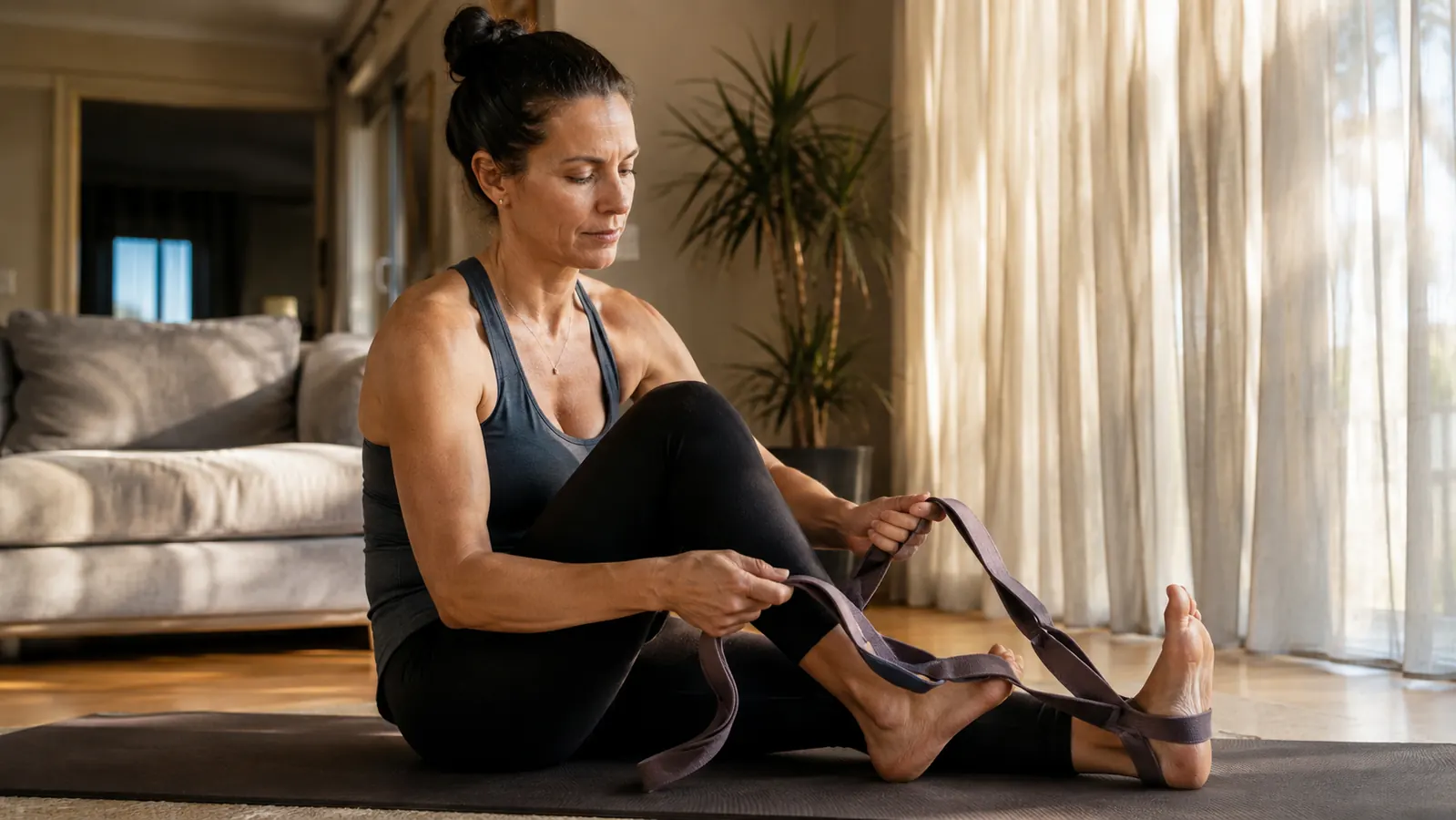
My hips were talking to me for two years before I finally listened. Every morning they felt like two rusty hinges. Every squat felt a half-inch short of where it should be. Every run after mile three had that familiar dull pull across the front of my left hip. I knew it. I just kept pushing through it, the way busy people do when they tell themselves they will deal with it later.
I tried the foam roller. I bought a lacrosse ball. I bookmarked a dozen YouTube mobility routines and actually did maybe three of them before life took over again. A fitness app on my phone had a whole hip flexibility program that I started twice and abandoned twice. None of it stuck, because none of it was simple enough to keep doing when you have seventeen other things happening before 8 AM.
Then my friend Dana, who works as a physical therapy assistant, came over one evening and watched me stand up from the couch. She did not say anything dramatic. She just went to her bag and pulled out a long cotton strap with a row of loops sewn into it. She handed it to me and said: 'Lie down on the floor. Give me ten minutes. I want to show you something.'
She handed me a strap and said: give me ten minutes. Two years of tight hips, and it took ten minutes on my living room floor to feel the difference.
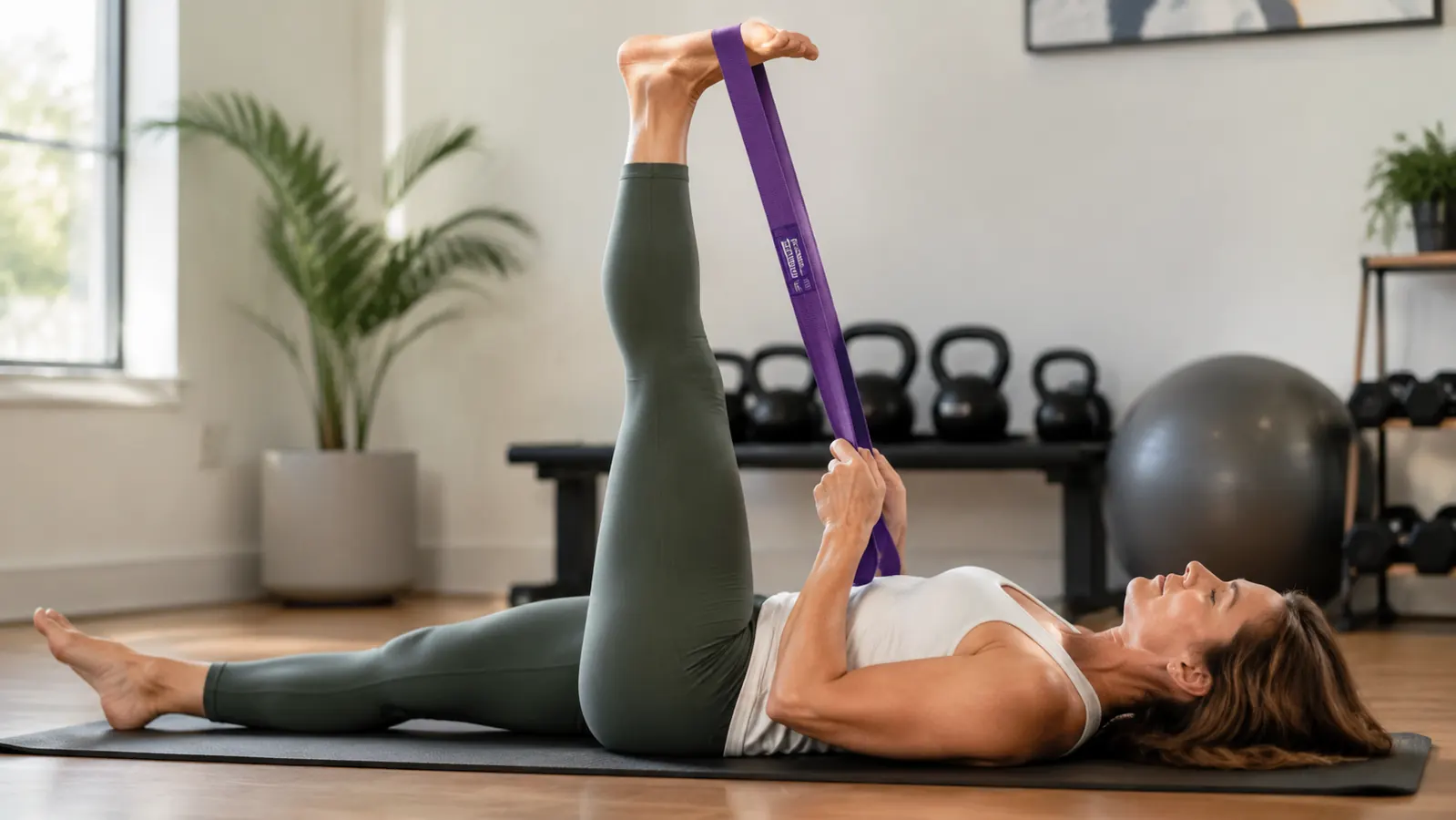
I lay on my back. She put the strap around the ball of my right foot and told me to straighten my leg toward the ceiling. Then she told me to inch my grip up one loop at a time as I breathed out, a little further each time, not forcing anything. Inside of three minutes my hamstring was doing something it had not done in years. I felt the back of my thigh open up, slow and steady, without pain.
Then she had me loop it around the outside of my foot and let my leg fall to the side, held just at the edge of a stretch. Not bouncing. Not straining. Just sitting in that lengthened position while I breathed. And that is when I felt it: the hip flexor on the right side, the one that had been quietly complaining for two years, finally released. It was not dramatic. It was just a slow, obvious letting go.
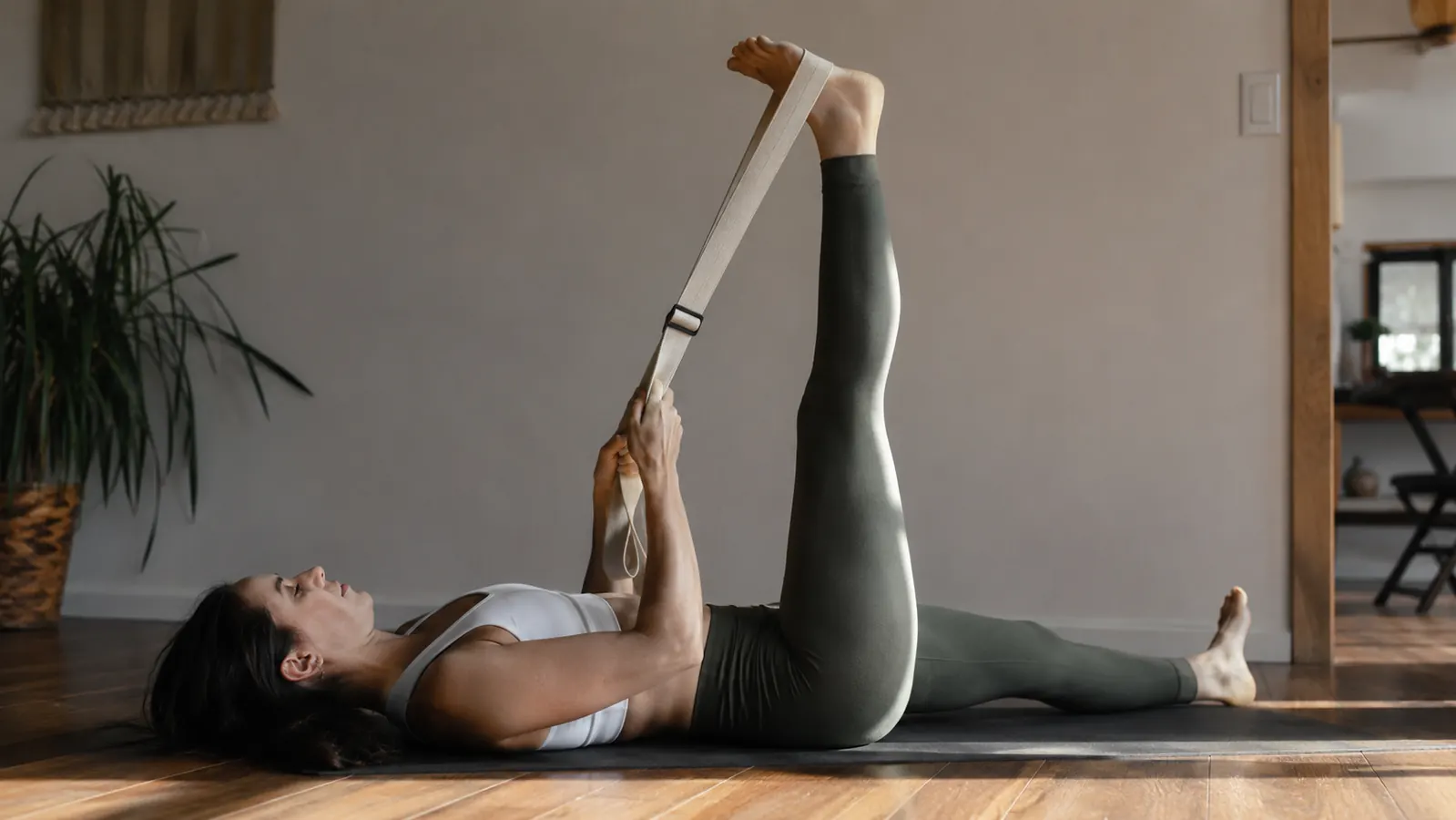
The strap Dana was using was the OPTP Stretch Out Strap. The thing I had seen physical therapists use in gym settings and never thought to buy for myself, because I assumed it was for serious athletes or people in rehab. It runs about sixteen dollars on Amazon. I had spent more than that on a lacrosse ball set that now lives under my couch.
If a PT would give you this before anything else, it probably belongs in your routine too
The OPTP Stretch Out Strap is what Dana uses at work and recommends to clients who need a simple, consistent way to work on hip flexibility without a partner. Rated 4.7 stars from nearly 28,000 reviews. Comes with an exercise booklet so you know exactly what to do with it.
Amazon Check Today's Price on Amazon →What makes this strap different from a regular resistance band or a yoga strap is the loops. You do not grip one fixed point. You work through the rungs progressively, moving your hand one loop closer as your muscle releases, going deeper only when your body says it is ready. It takes the guesswork out of how far is too far. You just feel it and move. That is something I could never quite figure out with a band, where I was always fighting the tension instead of working with it.
I ordered mine that same night. The strap arrived in two days and I used it the morning after. Twelve minutes on the floor before coffee, working through four stretches Dana had written on a sticky note. Hamstrings, hip flexors, IT band, and a seated piriformis stretch I had never been able to do properly on my own. By the end of the week I was doing it every morning without thinking about it. Not because I am disciplined. Because it was twelve minutes on the floor with a sixteen-dollar piece of cotton, not a thirty-minute program that required me to clear furniture and follow along with a video.
Six weeks in, my squat is noticeably deeper on both sides. My left hip no longer talks to me on runs until mile five, if at all. I got off a long car ride last month and stood up without the usual stiffness that used to greet me after anything over two hours. I am not a different athlete. I am just less creaky, and that turns out to matter more than I realized.
What I Would Tell You If We Were Sitting at My Kitchen Table
Here is the honest version. This strap will not fix years of tightness in a week. It is not a magic cure and I would not tell you it was. What it does is give you a consistent, low-effort tool that actually makes it possible to stretch properly on your own, at home, in the time you realistically have available. For me, that was the missing piece. Not more information about mobility. Not a better app. Just a simple tool that made the right thing easy enough to actually do.
If your hips are tight, if you have been ignoring that pull in your hip flexor the same way I did, if you have tried the foam roller and the YouTube routines and they have not stuck, try the strap. Twelve minutes in the morning. Four stretches. You do not need to clear a full workout block for this. You just need to lie on the floor with a piece of looped cotton and let your body do what it already knows how to do. Sometimes the simplest tool is the one that finally works.
Twelve minutes a morning is the only commitment this requires
The OPTP Stretch Out Strap comes with a printed exercise guide and has been the go-to tool for PTs, coaches, and everyday athletes for decades. If you want to know more about exactly how to use it or how it compares to stretching with a resistance band, I have written about both.
Amazon Check Today's Price on Amazon →