
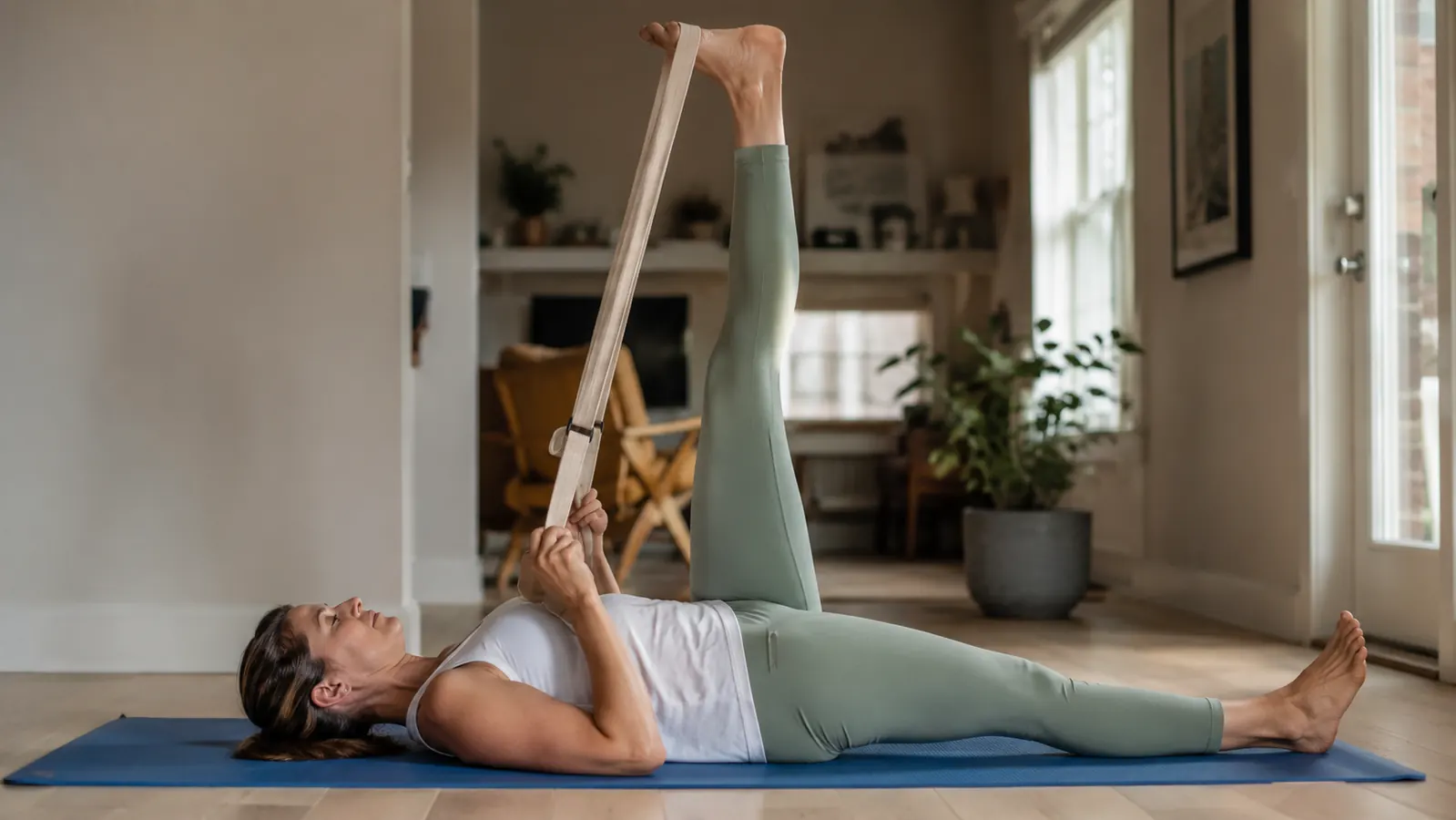
My hamstrings had been tight for years. Not dramatically tight, just that constant low-level stiffness where touching your toes feels optimistic and the morning after leg day requires a slow shuffle to the coffee maker. I foam rolled. I did a few minutes of stretching after workouts, when I remembered. I took a yoga class once a month if I was lucky. Nothing stuck. Then a physical therapist I know handed me the OPTP Stretch Out Strap and said, "Use this for ten minutes every morning for a month and tell me what you think." I did. Then I kept going. Six months later, I can put my palms flat on the floor, my hips move freely through my squat, and the morning shuffle is gone. This is what actually happened.
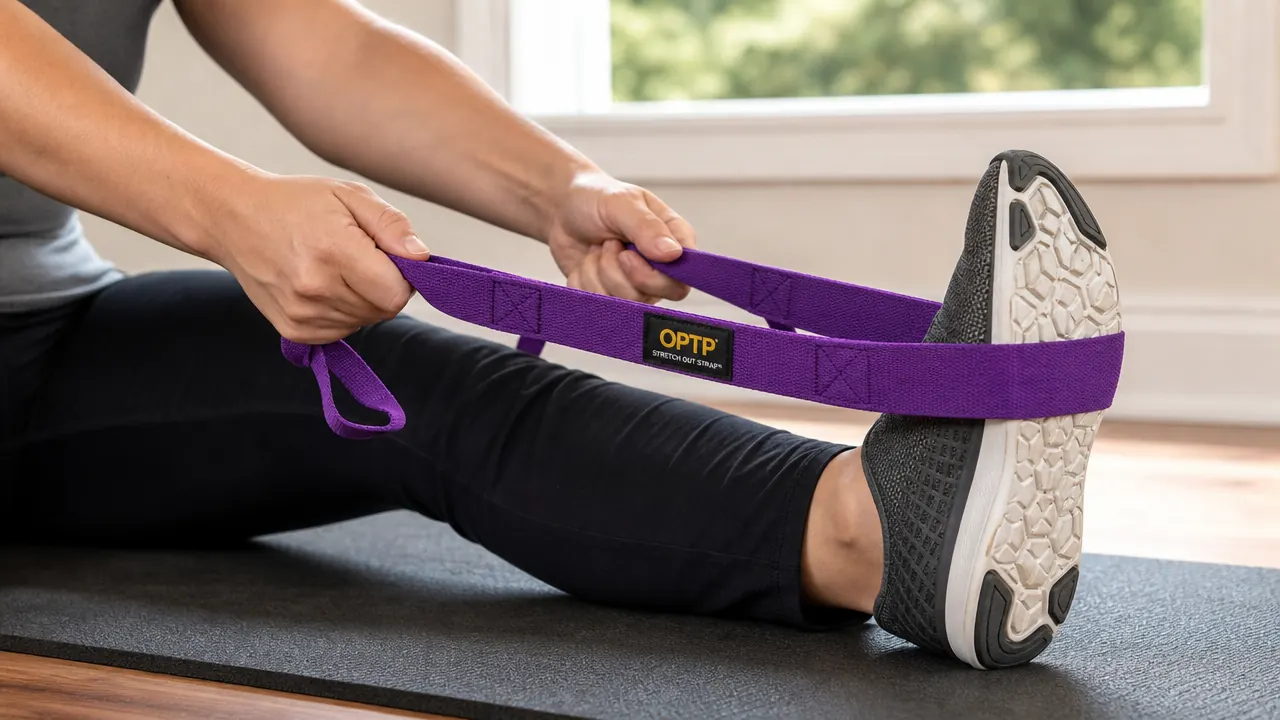
The OPTP Stretch Out Strap has been around since 1981. Physical therapists, yoga teachers, and athletic trainers use it in clinics and studios. It is a simple woven nylon strap with ten separate loops along its length. That loop design is the whole idea: instead of clutching one fixed point on the strap and fighting your own tension, you work loop by loop, moving gradually deeper without straining. It sounds almost too simple. It is not.
The Quick Verdict
The most effective stretching tool I have ever used, and it costs less than a single physical therapy copay. If you have been meaning to get serious about flexibility for years and never quite have, this is the thing that will actually make that happen.
Amazon Check Today's Price →Your hamstrings have been tight long enough. Here is the tool PT clinics keep in every treatment room.
The OPTP Stretch Out Strap has a 4.7-star rating from over 27,000 buyers and comes with an illustrated exercise booklet so you know exactly what to do on day one.
Amazon Check Today's Price on Amazon →How I Used It: Six Months of Morning Stretching
My routine was straightforward. Every morning, before coffee, I put the strap on the floor next to my mat and worked through eight stretches: supine hamstring, inner thigh, hip flexor, calf, IT band, piriformis, quad, and shoulder. Total time was about twelve minutes on most days, sometimes fifteen if I was not in a hurry. I did not add anything fancy. I did not buy a foam roller routine to pair with it or a yoga app to supplement it. I just used the strap, every morning, the same way.
The illustrated exercise book OPTP includes is genuinely good. It is not glossy marketing material. It is a practical booklet showing setup positions, which loops to grip for different flexibility levels, and how to progress each stretch over time. I referenced it constantly in the first three weeks until the sequences became automatic. If you are new to structured stretching, that booklet will do more for you than any YouTube rabbit hole.
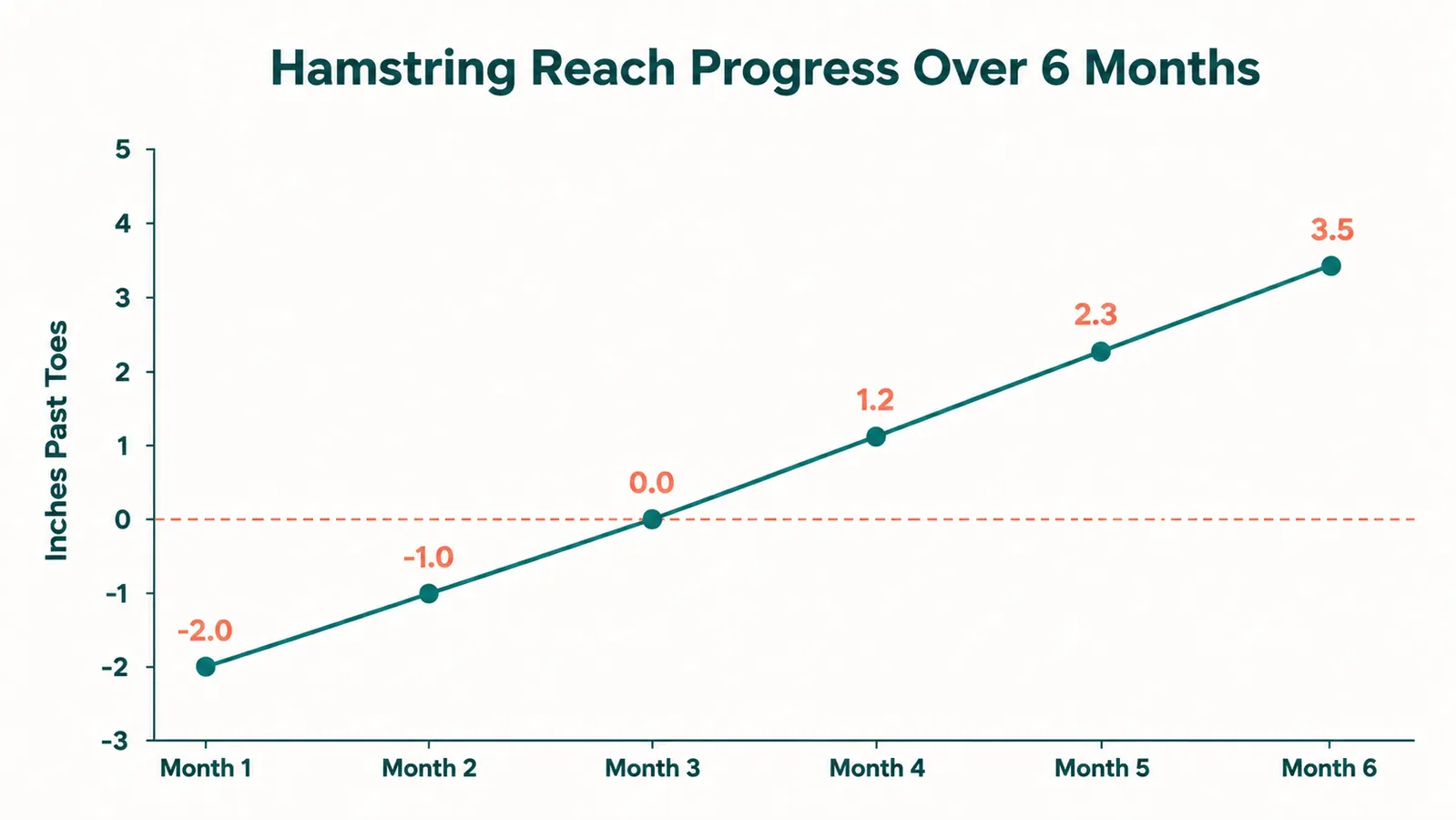
I tracked flexibility informally by measuring my fingertip distance from the floor in a standing forward fold every few weeks. At the start, I was about two inches short of reaching the floor. By month three, I was touching with my fingertips. By month six, I can place my palms flat. That is not genetic gifting. That is consistent daily use of a tool that holds positions your own muscle tension would not allow you to hold alone.
What the Loop Design Actually Does
Most people stretch the same way I used to: grab whatever you can reach, feel the pull, hold for thirty seconds, let go. The problem is that your body is fighting you the entire time. When a muscle is under tension it cannot release, your nervous system triggers a protective reflex that resists the stretch. You are essentially arm-wrestling your own hamstrings and wondering why they never loosen.
The loop design changes this. You start in the first or second loop, which puts very little tension on the muscle. You breathe, the nervous system relaxes, and then you slide your hands to the next loop, taking the muscle a little further. You are not forcing anything. You are coaxing. Physical therapists call this proprioceptive neuromuscular facilitation when they formalize it, but the version you do with this strap at home is simpler: breathe into the stretch, ease deeper, repeat. My hamstrings went from defensive to genuinely cooperative within about three weeks.
You are not forcing anything. You are coaxing. My hamstrings went from defensive to genuinely cooperative within about three weeks.
The strap is also long enough, at six feet, to reach your foot even when your leg is raised straight up and your flexibility is poor. That matters more than it sounds. Shorter alternatives, like a yoga strap without loops or a resistance band, require you to hold an awkward shortened grip when your range of motion is limited. You end up hunching, rounding your back, and defeating the purpose. This strap lets you lie flat and work from a neutral spine position even when your foot is barely off the floor.
What Changed in My Recovery
I started this experiment expecting to get more flexible. What I did not expect was the change in how I felt after hard workouts. Before I started consistent morning stretching, the day after leg day was rough. Not injured rough, just that grinding soreness through the posterior chain that made stairs feel like a personal insult. By month two, that soreness was noticeably shorter. I was feeling recovered by the following morning instead of carrying it into the second day.
There is real physiology behind this. When you consistently stretch tight muscle tissue, you improve blood flow to the area, which is a significant part of how muscles clear the byproducts of hard training. You also reduce the resting tension in the muscle itself, which means it is starting each workout in a longer, more prepared state rather than a compressed, braced one. My squat depth improved noticeably by month three, not because my legs got stronger, but because my hips finally had enough range to actually get there. That is a recovery story as much as a flexibility story.
My hip flexors were the other big surprise. I teach group fitness and I am also a parent, which means I sit in a car driving kids places and then immediately go stand on a gym floor for an hour. That pattern creates chronically short hip flexors. Before month one was done, I felt a difference in how my stride opened up during warm-up. By month three, my lower back, which had been occasionally achy after long training days, quieted down almost entirely. Tight hip flexors and a cranky lower back are usually the same conversation.
The Strap vs. What I Tried Before
I want to be honest about the alternatives I had tried, because I know the pattern. Foam rollers are useful, but they address muscular tissue quality, not range of motion. You can foam roll faithfully and still be inflexible because rolling does not take the muscle through its full length under tension. I still use a foam roller and I think it belongs in a complete recovery practice. But if flexibility is the actual goal, a roller is not a stretching tool.
Yoga classes are wonderful, but they require a consistent schedule I have never been able to maintain. One class a week does not offset six days of sitting and hard training. I also tried a cheap elastic band from a set I bought for resistance training. The problem is that elastic bands resist as you pull, which means you are actively working your arms and shoulders to hold the stretch position instead of relaxing into it. That is the opposite of what you want. The OPTP strap is not elastic. It is inelastic woven nylon. When you reach the end of your range and the strap goes taut, the strap simply stops. No rebound, no fighting. You hold the position and breathe. That distinction makes a real difference in how a stretch actually feels and how long you can sustain it. For a deeper look at how the two tools compare, I wrote a full piece on the OPTP strap versus resistance band stretching.
Build Quality and Durability After Six Months
I was mildly skeptical about a budget tool holding up through daily use. Six months in, the strap looks nearly identical to when I bought it. The loops show no fraying. The nylon is still firm and flat without any stretching or distortion. I have washed it twice by hand with mild soap and it dried quickly without changing shape or stiffness. The stitching on each loop, which takes the most repeated stress, is intact and shows no loosening.
OPTP has been making this strap since 1981 and it is manufactured in the United States. That longevity matters when you are buying a stretching tool, because the company clearly has decades of feedback on what fails and what does not. There are many imitation stretch straps on Amazon at similar or lower price points. Some are fine. None of them have the same loop count, strap length, or material quality as this one, and several I have seen use elastic construction rather than inelastic nylon. The original is the original for a reason.
What I Liked
- Inelastic nylon holds position without resistance, letting muscles fully relax into the stretch
- Ten loops allow gradual progression that avoids protective muscle reflex
- Six-foot length accommodates all body sizes and very limited flexibility at the start
- Durable enough for daily use over many months without fraying or deformation
- Included exercise booklet is genuinely practical and well-illustrated
- Light and compact enough to keep in a gym bag or travel with
Where It Falls Short
- Takes 10-15 minutes of daily commitment to see meaningful results over weeks and months
- No video instructions included, so beginners may need to look up form cues online for a few of the exercises
- The woven nylon can feel rough on bare skin if gripped tightly for extended holds
Who This Is For
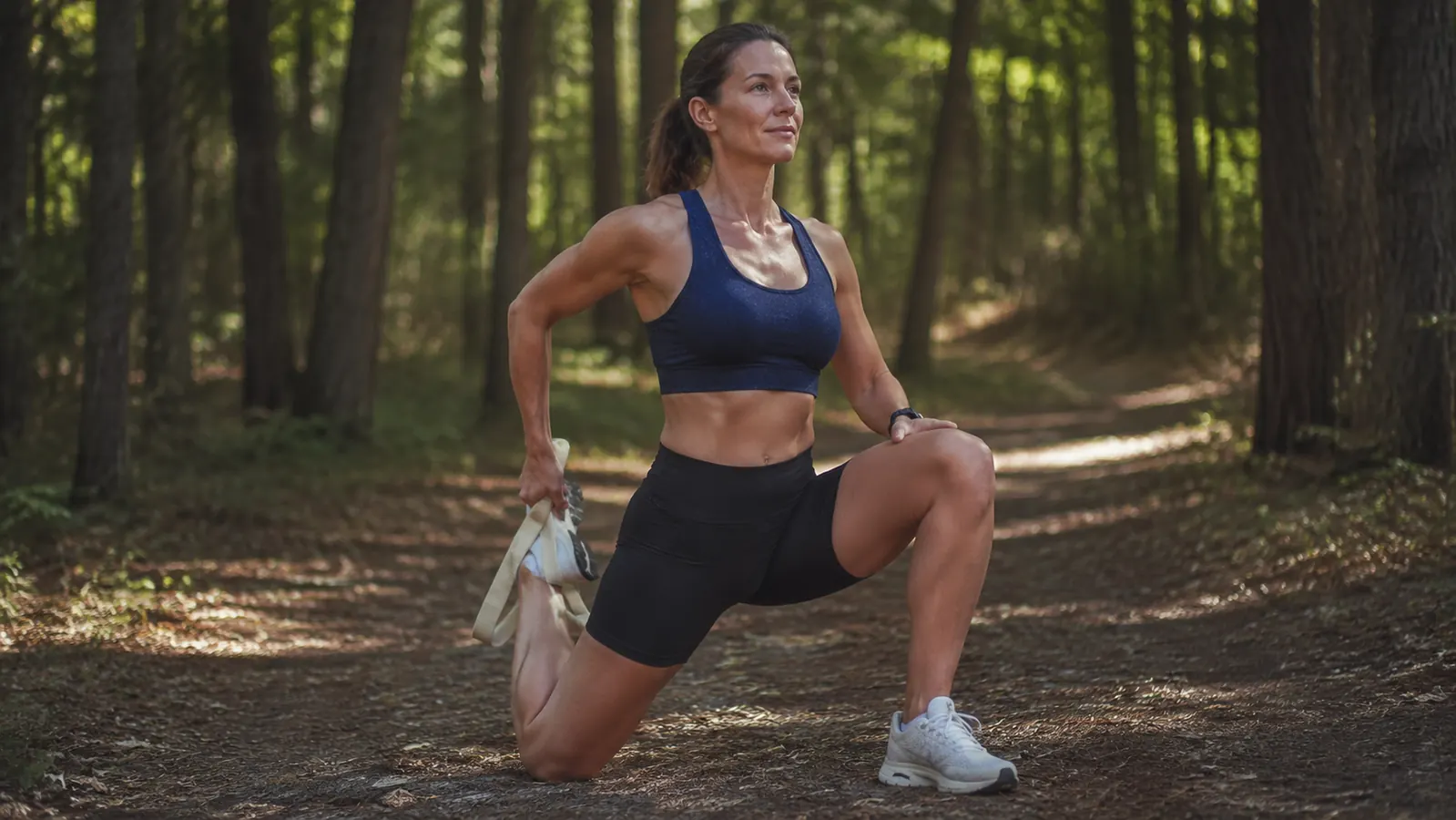
This strap is for anyone who has been meaning to get serious about flexibility and never quite has. That is the honest answer. If you are a runner whose calves and hamstrings stay chronically tight no matter what you do, this will change that with consistent use. If you are a nurse or teacher who stands all day and then tries to exercise on a body that is already spent, ten minutes with this strap every morning will change how that body feels by afternoon. If you are a weekend athlete who wonders why your recovery takes longer than it used to, the answer is almost certainly tissue quality and range of motion, and this addresses both. I also think it is a great starting point for anyone doing the how-to-improve-flexibility program outlined on this site, since the strap gives you the mechanical assist to actually hold the positions those routines require.
Who Should Skip It
Skip it if you are dealing with an acute injury, a herniated disc, or significant nerve pain in the lower body. A stretch strap works by creating tension in the muscle, and applying tension to already-irritated tissue can make things worse. Get cleared by your physical therapist or doctor first. Also skip it if you are hoping for a tool that does the work for you in a passive way, like a massage or a heated pad. This requires you to show up and move. Ten minutes is genuinely not very long, but it is ten minutes you have to actually do. If that is not going to happen, the strap sitting in your gym bag will not help anyone.
If you want to see what a real daily routine looks like before you commit, the 10 post-workout stretches guide on this site lays out exactly which moves to do and in what order. You can do that routine before you buy to make sure it is something you will actually stick with.
Six months of morning stretching changed my flexibility more than anything else I have tried. This is the affordable tool that made it stick.
The OPTP Stretch Out Strap is rated 4.7 stars by over 27,000 buyers. It ships fast and comes with an exercise booklet so you can start the same day it arrives.
Amazon Check Today's Price on Amazon →