
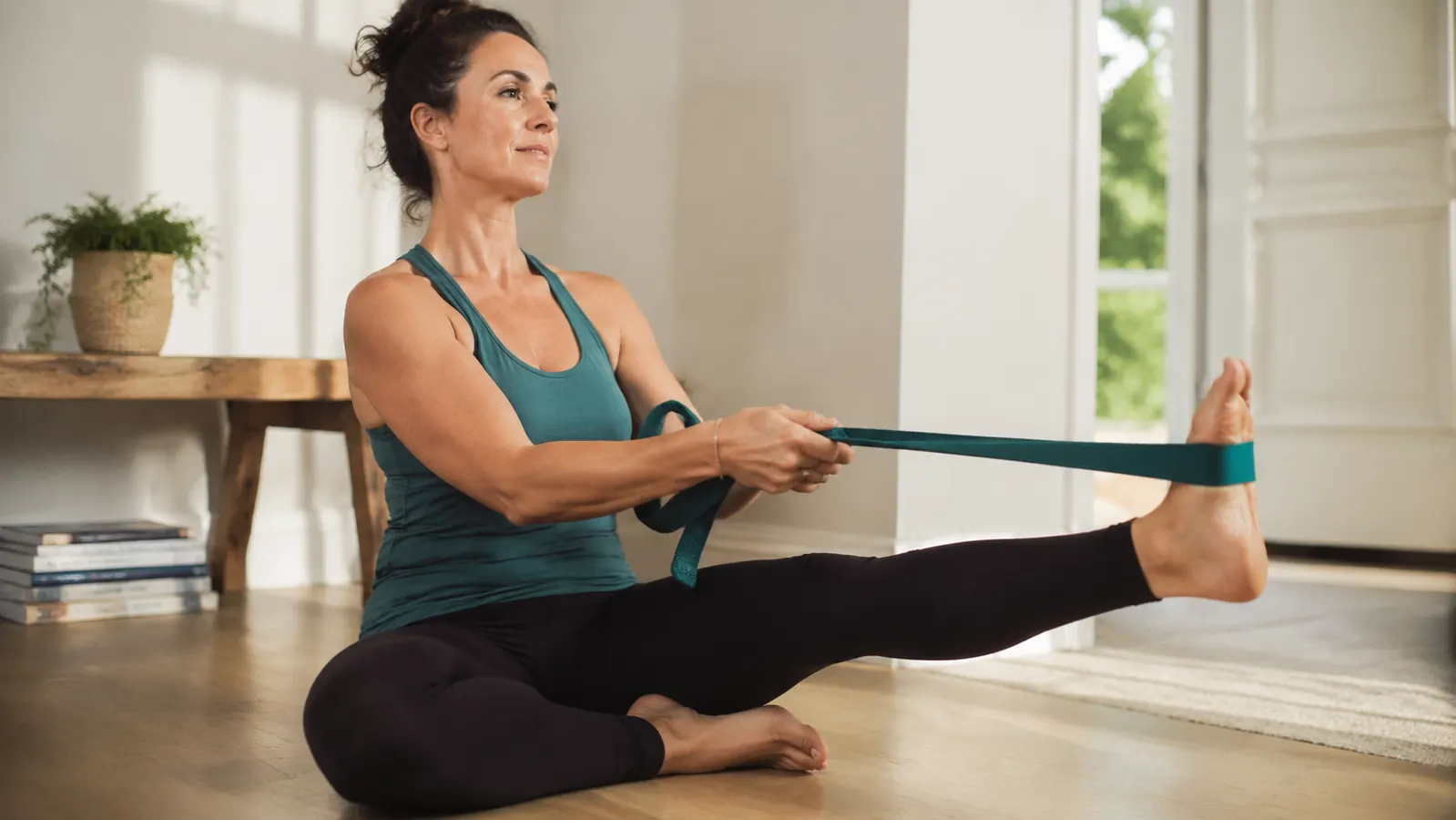
If you have been stretching the same way for years and still cannot touch your toes, the method is the problem. Most people do the same thing over and over: sit on the floor, fold forward, hold for 30 seconds, and call it done. That approach has a ceiling. Your nervous system relaxes only as far as you can reach on your own, and without any outside tension, you are stuck chasing the same six inches of flexibility you have had since high school.
A stretching strap changes the equation. By looping it around your foot, calf, or ankle, you apply gentle progressive tension that takes you just a few degrees past your comfort zone, where real adaptation happens. Physical therapists and yoga instructors have used strap-assisted stretching for decades precisely because it works without requiring a partner, a foam roller, or 45 minutes of free time. The OPTP Stretch Out Strap has become the go-to tool for this approach, with over 27,000 reviews on Amazon and a 4.7-star rating from everyone from recreational runners to post-surgical rehab patients. It comes with an exercise booklet and ten loops so you can control exactly how much assistance you give yourself. I have been using mine for eight months, and the difference in my hip and hamstring flexibility has been clear enough that my training partners started asking what I changed.
Your stretches stopped working because you have no way to go deeper. This budget strap fixes that.
The OPTP Stretch Out Strap has ten loops for progressive resistance, a built-in exercise guide, and more than 27,000 five-star reviews from runners, nurses, and weekend athletes. Check today's price on Amazon.
Amazon Check Today's Price on Amazon →Here is the step-by-step method I recommend for beginners and returning athletes alike. Follow this sequence for 10 minutes a day and you will feel a measurable difference in hamstring, hip, and shoulder range of motion within three to four weeks.
Step 1: Set Up a Consistent Time and Space Before You Do Anything Else
Flexibility training fails for one reason more than any other: it gets skipped. You finish a workout, you are tired, and the stretching routine falls off. Or you plan to do it in the morning but the day starts before you get there. The fix is to attach your stretching strap session to something that already happens every day without negotiation. For a lot of the people I coach, that anchor is right after brushing teeth in the morning, or the ten minutes after a shift ends before they change clothes.
Keep your OPTP Stretch Out Strap somewhere visible: draped over a doorknob, hanging on your gym bag, sitting on your yoga mat. You will do what is easy. Set a timer for ten minutes. That is all this takes. You do not need a dedicated mobility session or a specialty class. Ten minutes of strap-assisted work, done consistently six days a week, beats an hour-long session twice a month by a wide margin.
Lay down a yoga mat or a clean patch of carpet. You will spend most of this routine on your back, which is good news for anyone who has lower back pain or hip tightness that makes forward folds uncomfortable. The supine position takes load off the spine and lets your hip flexors relax, which means you get a more honest read on your actual flexibility.
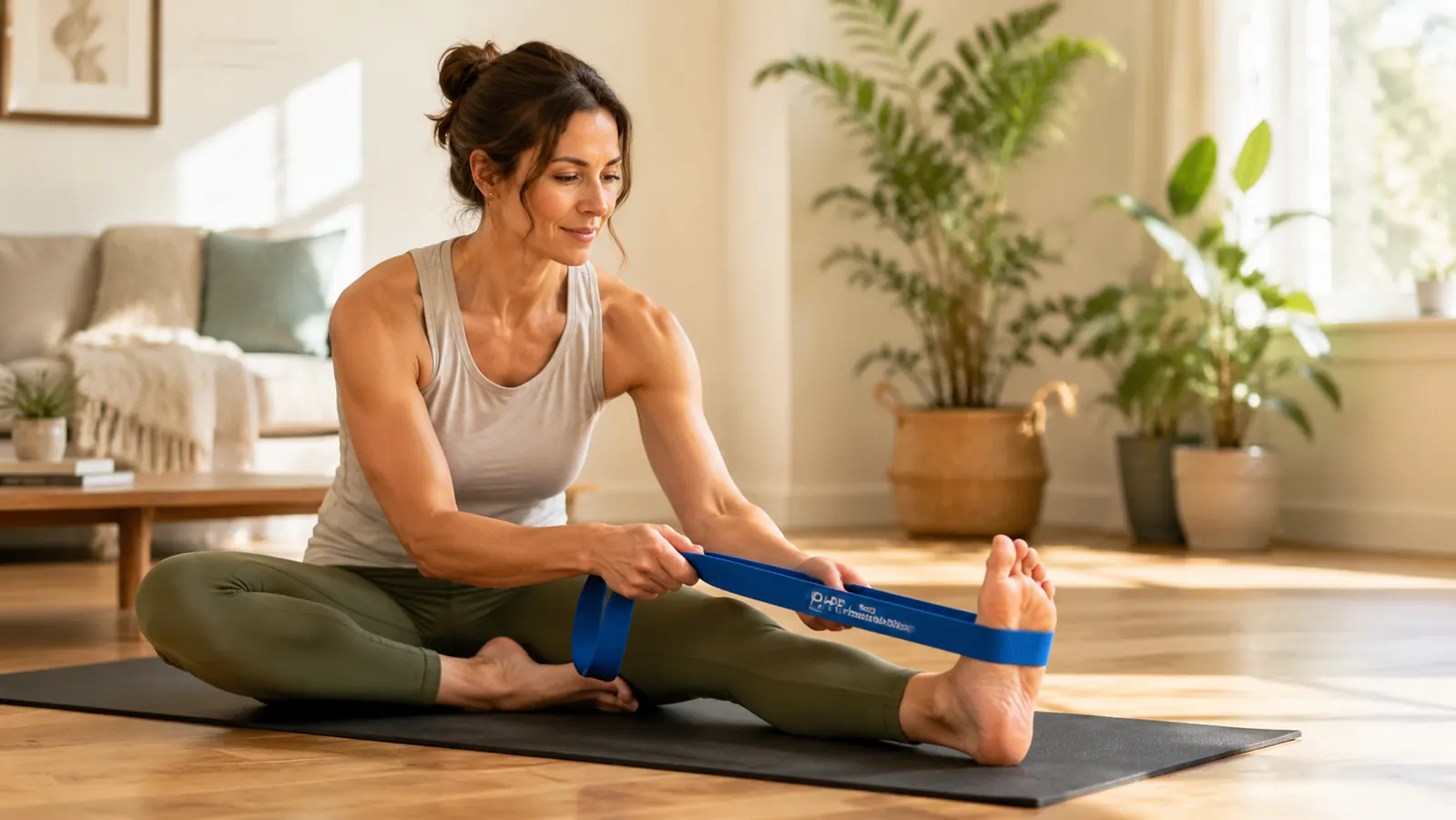
Step 2: Start With a Two-Minute Warm-Up Before You Touch the Strap
Cold muscles do not stretch. They resist. Trying to pull a cold hamstring into a deep stretch is the fastest way to feel sharp discomfort and give up. You do not need a full warm-up for a flexibility session, but you do need two minutes of light movement to get blood into the muscles you are about to work.
Do ten slow hip circles in each direction standing up. Walk in place with high knees for 60 seconds. Roll your shoulders forward and backward five times each. If you are doing this after a workout, skip the warm-up entirely because your muscles are already ready. If you are doing it first thing in the morning or after a long shift on your feet, those two minutes matter more than people think. The stretching strap will feel completely different in a warm muscle versus a cold one.
Step 3: Work the Hamstrings First Using the Single-Leg Supine Method
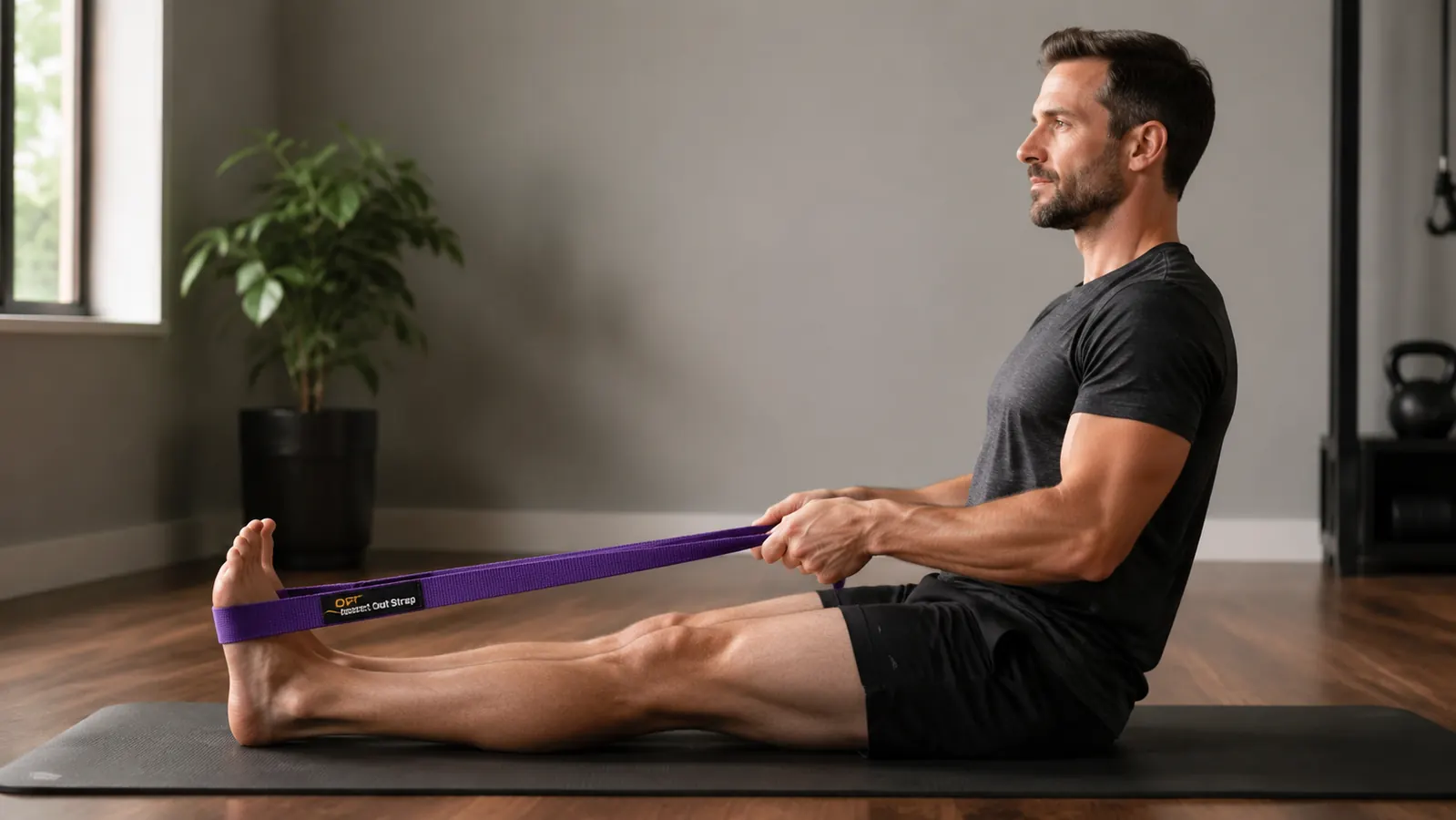
Lie on your back with both knees bent and feet flat on the floor. Loop the stretching strap around the arch of your right foot, holding one loop in each hand. Straighten your right leg toward the ceiling as far as it will go comfortably. Now slowly walk your hands up the loops, shortening the strap, until you feel a moderate pull in the back of your thigh. Not pain. Not burning. A steady, workable tension.
Hold that position for 30 seconds. Breathe out slowly on the hold. Then, here is the part that makes strap work more effective than solo stretching: flex your foot toward your shin on the exhale to deepen the stretch by a few extra degrees. After 30 seconds, release one loop to give yourself a bit of slack, take two breaths, then shorten the strap again by one loop to find a slightly deeper position. Repeat this two more times, spending 90 seconds total on each leg. Most people find they can move two to three loops deeper by the third round than they could at the start of the set.
Switch legs and repeat. That is your hamstring work done. Three minutes, both legs, and you have already addressed the tightest muscle group for most adults who sit or stand all day.
You do not get more flexible by pulling harder. You get more flexible by breathing into tension and holding it long enough for your nervous system to stop fighting you.
Step 4: Move to the Hip Flexors and Outer Hips With Two Supine Variations
Stay on your back. Bend your right knee and hug it toward your chest with your hands. Hold 20 seconds. This is your baseline hip flexor check. Now loop the stretching strap around your right shin, just below the knee. Hold the strap in your left hand and let your right knee cross your body toward the floor on your left side. You are now in a supine IT band and outer hip stretch. Let gravity do the work. Your right shoulder should stay flat on the mat. Hold for 30 to 45 seconds and breathe.
For the hip flexor itself, straighten your right leg toward the ceiling again and then let it slowly lower across your body to the left, guided by the strap in your left hand. This is a different angle than the hamstring stretch and targets the hip rotators and glute medius, which tend to be chronically tight in runners, cyclists, and anyone who carries a toddler on one hip all day. Switch sides. This portion of the routine takes about three minutes for both hips.
If you want to go deeper into how these stretches layer together for a full recovery routine, the article on 10 stretches to do with a stretch strap after workouts covers the full sequence with additional variations for calves, quads, and shoulders.
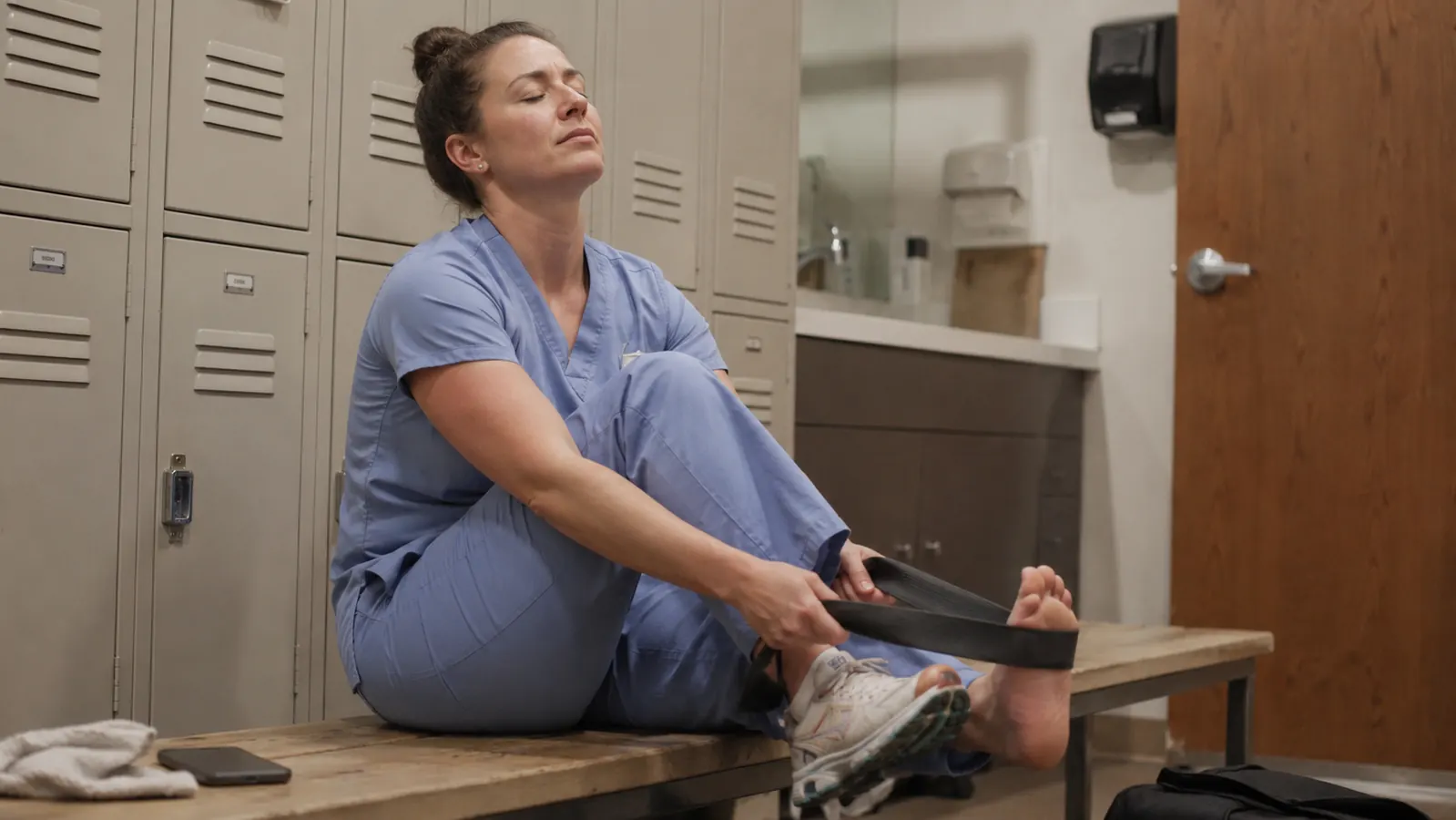
Step 5: Finish With a Two-Minute Shoulder and Chest Opener to Reset Your Posture
Most people skip shoulder stretching entirely and then wonder why their upper back is always tight. If you spend hours at a desk, behind a steering wheel, or hunched over a phone, your chest is shortened and your upper back is overstretched. A stretching strap is one of the best tools for addressing this because you can control the width of your grip.
Stand up and hold the stretching strap in both hands in front of you, hands about shoulder-width apart. Slowly raise the strap overhead and then continue the arc behind you until the strap rests against your lower back or glutes. Go only as far as your shoulders allow without arching your lower back. The strap lets you adjust your grip width to match your current range of motion. As you get more flexible over weeks, you will naturally narrow your grip and the arc will feel easier. This is a genuine sign of progress. Do three slow passes forward and back, breathing out on each pass. Then hold the strap behind your back and gently squeeze your shoulder blades together for 15 seconds.
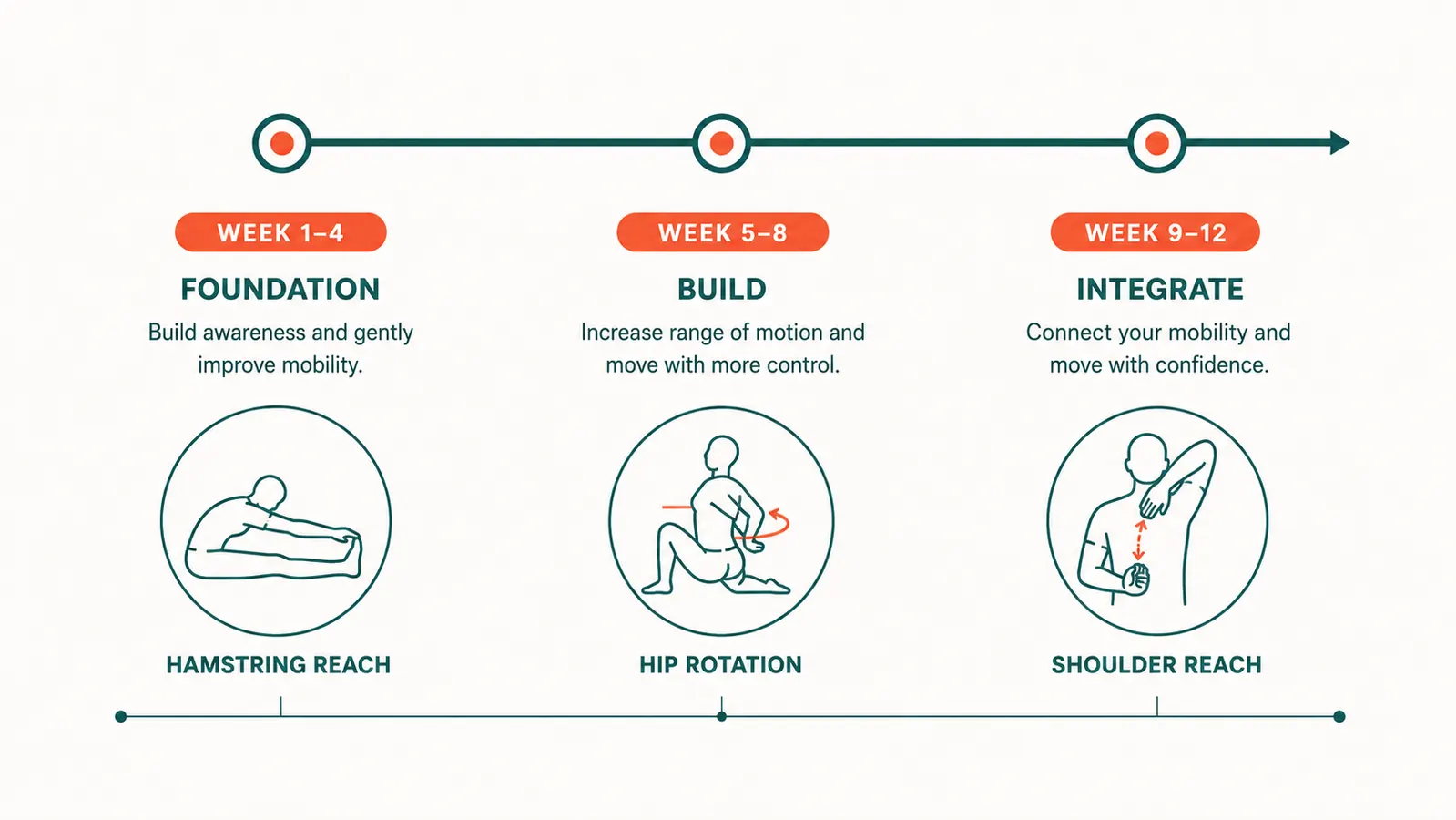
That is the complete ten-minute routine. Hamstrings, hips, shoulders. It hits the three areas where most adults lose range of motion fastest and where regaining it makes the biggest difference in how you feel during workouts and during the rest of your day.
What Else Helps: How to Accelerate Your Results Over 30, 60, and 90 Days
The stretching strap does the work, but a few habits will speed up how quickly you see results. In the first 30 days, focus on consistency rather than depth. Show up every day, follow the five steps above, and do not try to push into pain. Your nervous system needs repetition before it learns to trust the new range of motion. Expect to feel noticeably looser within two to three weeks, especially in the mornings.
By days 31 to 60, you will likely be able to shorten the strap by one or two loops compared to where you started in step three. This is when you can start adding a second brief session, three to five minutes before bed on training days, using only the hamstring stretch. The body adapts during rest, so an evening session followed by a full night of sleep tends to produce faster gains than a single morning session alone.
From days 61 to 90, you are building maintenance-level range of motion that becomes your new baseline. People often report that flexibility gains plateau if they drop the strap work entirely, even after months of progress. The answer is not to train harder but to keep a short daily session going indefinitely. Ten minutes costs very little. The alternative, watching your range of motion slowly walk backward over months, costs much more in how your body feels during workouts.
Hydration matters more than most people expect. Fascia and connective tissue are partly water-dependent for their elasticity. If you are chronically dehydrated, your stretches will feel harder and your gains will come more slowly. Aim for half your bodyweight in ounces of water per day as a starting point. And if you have a particularly stiff area that is not responding to the strap alone, adding a foam roller for two minutes on that muscle group before you stretch will help the tissue respond better.
For a more detailed look at how the OPTP Stretch Out Strap performs over real months of daily use, read the OPTP Stretch Out Strap long-term review where I cover what changed in my mobility after six consistent months. And if you are trying to decide between a dedicated stretching strap and a standard resistance band for this kind of work, the stretch strap vs resistance band comparison breaks down why they are not interchangeable tools.
Ten minutes a day is all it takes. But you need the right tool to make those ten minutes actually work.
The OPTP Stretch Out Strap has been the physical therapist's pick for strap-assisted flexibility work for years, and at the current price it is one of the best investments in recovery you can make. Over 27,000 Amazon customers agree. Check today's price and get started this week.
Amazon Check Today's Price on Amazon →