
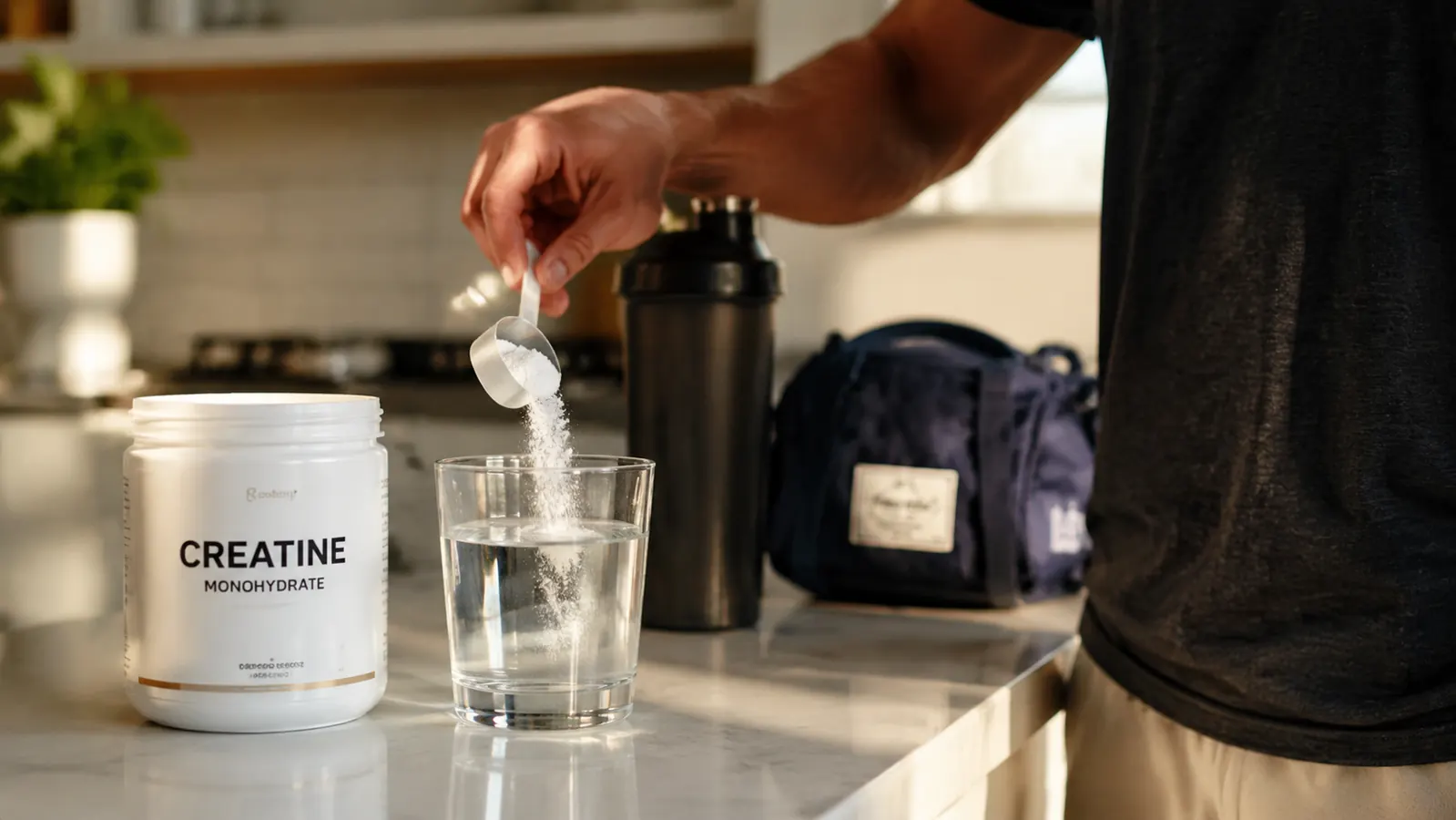
Most people who try creatine give up on it before it ever has a chance to work. They hear 'loading phase' and assume it means two months of supplements before anything happens. Or they try it for a week, feel nothing different, and figure it is not for them. Or they throw a scoop in their pre-workout on the days they remember, then forget it exists for five days straight. That is not a creatine problem. That is a consistency and protocol problem.
Creatine monohydrate is the most researched performance and recovery supplement in the world. It is not a stimulant, it is not a hormone, and it is not something that requires a bodybuilder's lifestyle to benefit from. If you train three days a week, work a physically demanding job, or just want to bounce back faster between sessions, consistent creatine use can make a real difference in how sore you are and how quickly your muscles feel ready again. This guide walks you through exactly how to do it right. As always, if you have a medical condition or take prescription medications, check with your doctor before adding any new supplement to your routine.
Tired of soreness that lingers three days after leg day? This is the most-studied recovery supplement in the world.
Optimum Nutrition Micronized Creatine Monohydrate has over 104,000 Amazon reviews and costs less than a dollar per day. If your muscles are slow to recover between sessions, this is the first place I would start.
Amazon Check Today's Price on Amazon →What Creatine Actually Does for Recovery (Not Just Strength)
Here is the short version: your muscles store creatine as phosphocreatine, which helps them regenerate ATP, the energy currency your cells use during exercise. When your phosphocreatine stores are full, your muscles can work harder, sustain effort longer, and recover faster between sets and between sessions. Most people focus on the strength side of that equation. But the recovery side matters just as much, especially if you are training three or four days a week and need your legs to feel functional again before your next session.
Research also suggests creatine helps reduce markers of muscle damage after hard efforts and may lower delayed-onset muscle soreness over time. That means fewer days of wincing when you sit down, fewer nights where your arms feel useless, and a shorter gap between your last hard session and the next one. For nurses on 12-hour shifts, parents chasing kids on the weekends, or anyone who cannot afford to feel wrecked for three days after every workout, that recovery acceleration is the whole point.
Step 1: Decide Whether to Load or Skip It
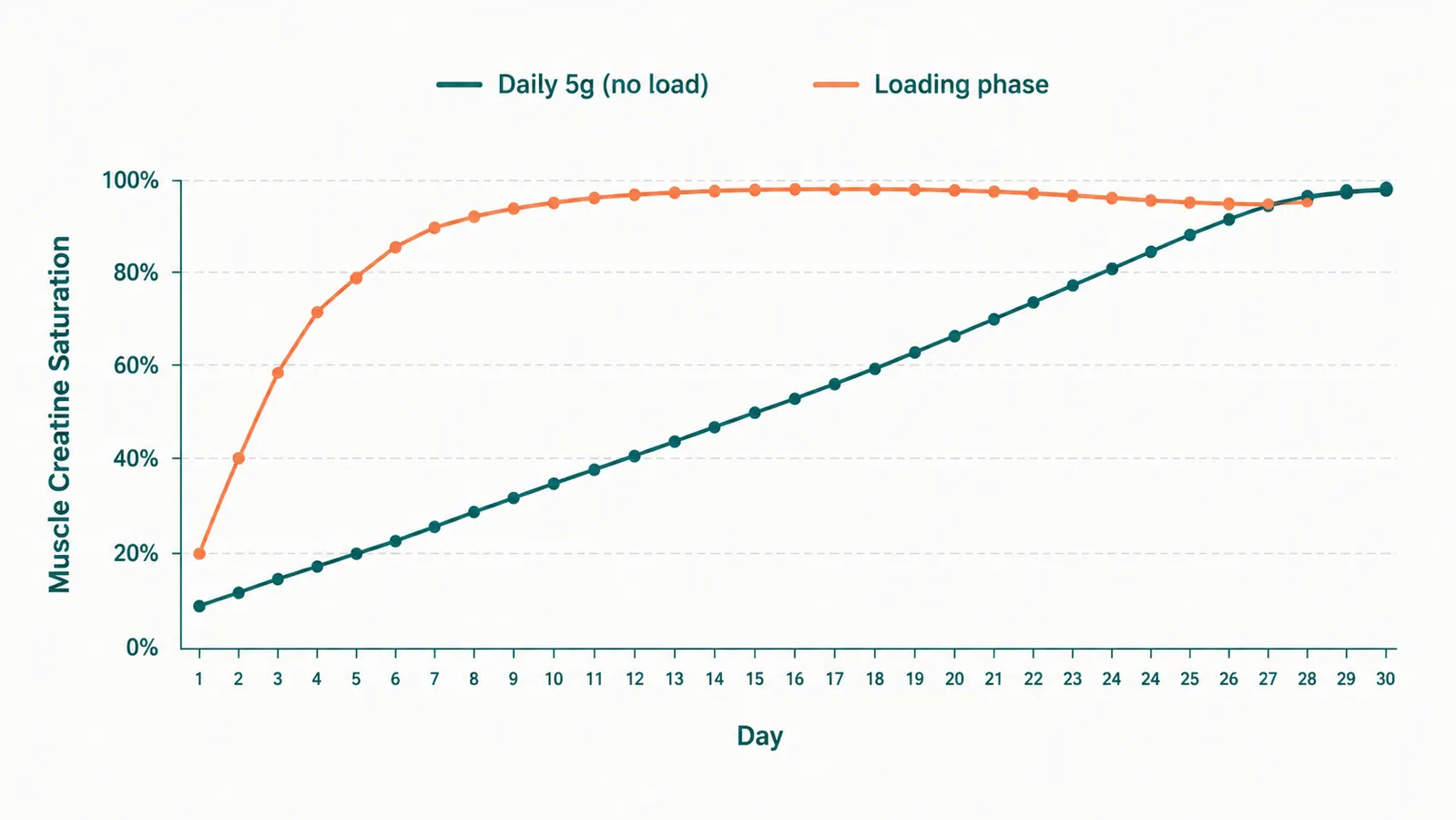
The loading phase gets more attention than it deserves. Loading means taking 20 grams per day for five to seven days (broken into four 5g doses) to saturate your muscles quickly. The alternative is simply starting at 3 to 5 grams per day and letting your muscles fully saturate over three to four weeks. Both approaches get you to the same place. The loading phase just gets you there faster.
For most people with a real schedule, skipping the loading phase is the right call. It is simpler, it causes fewer stomach issues, and the difference in timing is about three weeks. If you are preparing for a race or a competition in two weeks, loading makes sense. If you are building a long-term recovery habit, just start with a daily maintenance dose and stay consistent. You will be fully saturated by week four and you will not have to think about splitting doses throughout the day.
If you do choose to load, keep each dose to 5 grams and take them spread out across the day with meals. Do not dump 20 grams into a single shake. That is a reliable way to end up with digestive issues that make you swear off creatine entirely.
Step 2: Get Your Daily Dose Right
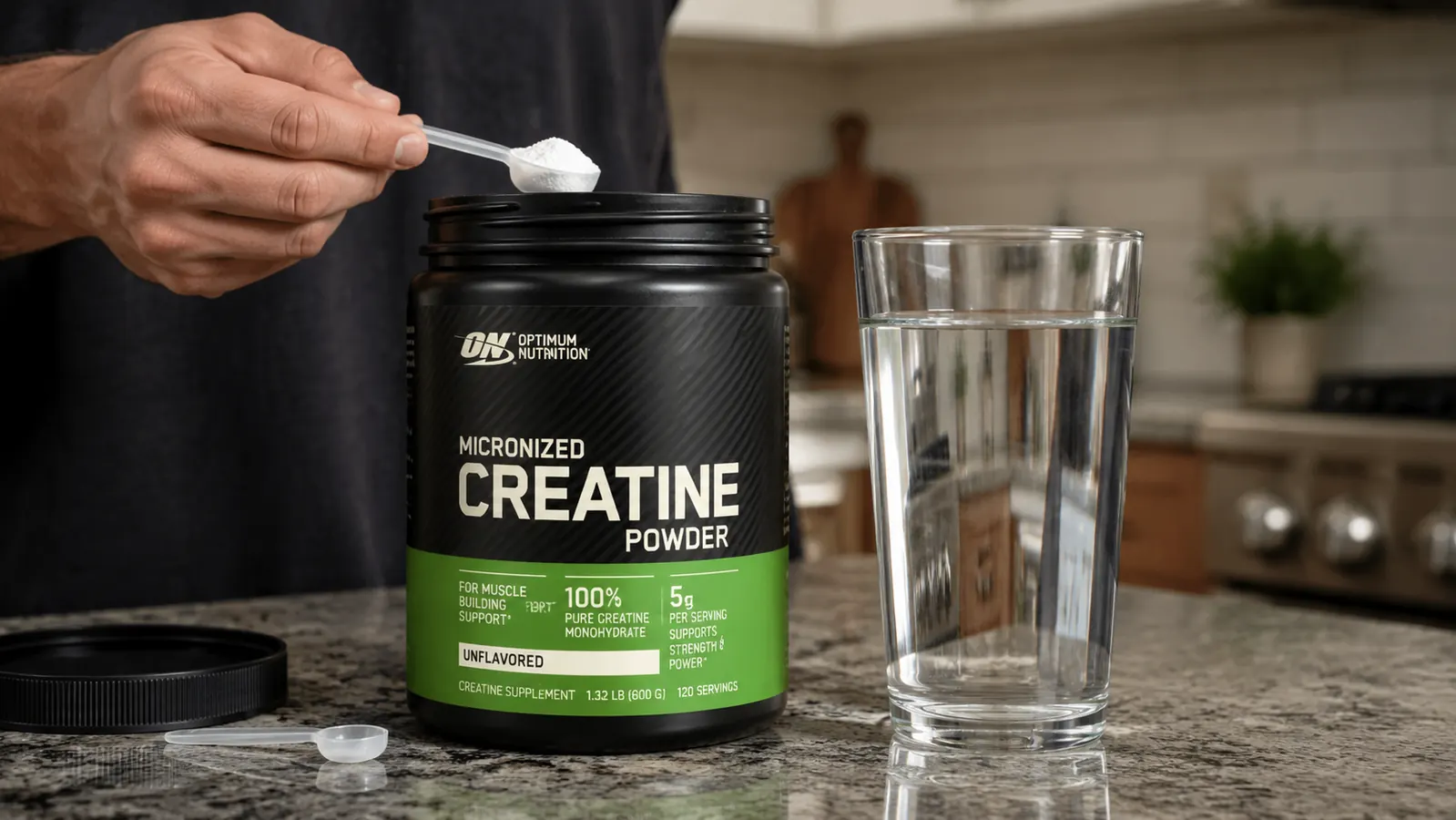
The maintenance dose for most adults is 3 to 5 grams per day. That is one level teaspoon of micronized creatine monohydrate. Not a heaping scoop. Not two scoops. One flat teaspoon, which lands right in the 3 to 5 gram range depending on grind size. Optimum Nutrition Micronized Creatine includes a scoop sized for this purpose, and it dissolves cleanly in water because the powder is micronized, meaning the particles are ground very fine. Coarser versions of creatine float and clump.
Larger athletes (over 200 pounds) can go up to 5 grams. Smaller or lighter individuals can do fine at 3 grams. There is no meaningful benefit to taking more than 5 grams per day in the maintenance phase. Your muscles can only store a finite amount of phosphocreatine, and once they are saturated, the extra just passes through. Save the container for another month instead.
Step 3: Pick Your Timing and Stick With It
Timing creatine is less critical than most supplement marketing makes it sound. The research on pre-workout versus post-workout versus any-time-of-day shows relatively modest differences, with a slight edge for post-workout timing on training days. But here is what actually matters: consistency beats perfect timing every single time. Missing three days because you forgot is far more costly than taking it at 7 AM instead of the 'optimal' post-workout window.
Pick a time that you will actually remember. For most people that is first thing in the morning with coffee, right after a workout, or with a specific meal. If you train early in the morning before eating, take it after your session with breakfast. If you work a shift and your schedule changes week to week, anchor it to a meal, not a clock time. The anchor matters more than the exact moment.
On rest days, still take it. Muscle creatine stores deplete slowly over days, not hours, but they do deplete if you skip consistently. Many people make the mistake of only taking creatine on training days, which means their stores fluctuate up and down instead of staying saturated. Daily use, seven days a week, is the actual protocol.
Consistency beats perfect timing every single time. Missing three days in a row costs you more than taking it at the 'wrong' hour ever will.

Step 4: Mix It Properly So You Actually Drink It
Micronized creatine monohydrate dissolves well in warm or room-temperature liquid. If you are using cold water straight from the fridge, give it an extra stir or shake and let it sit for 30 seconds. It will dissolve. The most common mixing complaints come from non-micronized versions, where the grit stays visible no matter what you do. Optimum Nutrition's micronized version mostly disappears in water, and it is unflavored, so it does not change the taste of whatever you add it to.
You can add it to water, juice, a protein shake, coffee, or oatmeal. Some people prefer it in juice because simple carbohydrates may help with creatine uptake, though this effect is modest and not a reason to drink juice if you were not already. Do not mix it into hot beverages like boiling tea or broth, since sustained heat can degrade the compound. Warm coffee is fine. A cup of boiling soup is not.
The biggest mixing mistake is not using enough liquid. Add your creatine to at least eight ounces of fluid. A tiny bit of water with a concentrated puddle of white powder at the bottom is unpleasant and wasteful. Eight to twelve ounces means the powder disperses properly and you are not leaving a dose behind stuck to the glass.
Step 5: Track Your Progress Over 30, 60, and 90 Days
Week one is often the week people quit. Nothing dramatic happens in week one. Your muscles are still saturating and you have not yet built up the phosphocreatine stores needed to notice a difference. Some people notice a pound or two of weight gain from water retention in the muscles, which is normal and is not fat. If the number on the scale goes up slightly in the first two weeks, that is creatine doing its job.
By week four, if you have been consistent, most people notice two things: they can push a bit harder in their sessions before hitting the wall, and they feel less wrecked in the 24 to 48 hours after a hard effort. The soreness does not disappear, but the worst edge of it tends to soften. By week eight and twelve, the cumulative effect on recovery compounds. You start training more consistently because you are not spending days limping around before you can go again.
A simple way to track this: rate your soreness on a scale of one to ten the morning after a hard session. Do this for two weeks before starting creatine, then again from weeks four through eight. Most people see a meaningful shift in those numbers by the end of month two. If you do not, your protein intake, sleep, or training volume may be bigger limiting factors than creatine alone.
What Else Helps Recovery Alongside Creatine
Creatine works best when the basics are covered. If you are sleeping five hours a night and eating under your protein needs, creatine will help at the margins but will not compensate for the foundation. Aim for 0.7 to 1 gram of protein per pound of body weight, seven to nine hours of sleep when possible, and adequate hydration throughout the day. Creatine slightly increases your water needs since it draws fluid into muscle cells, so if you are already borderline on hydration, drink an extra glass of water daily.
For people who are on their feet all day before they even get to a workout, the recovery combination that tends to work best is creatine in the morning, adequate protein across three meals, and some form of post-workout recovery tool like a cold wrap, a foam roller, or a stretch session. Creatine handles the cellular-level recovery work. The other pieces handle the physical tension and inflammation. You do not need all of them, but creatine tends to stack well with whatever else you are already doing.
If you want to read more about how creatine affects recovery specifically (not just strength gains), see the full breakdown in our article on 10 reasons creatine monohydrate helps muscle recovery. And if you are weighing Optimum Nutrition against a generic option, the Optimum Nutrition vs BulkSupplements creatine comparison covers exactly what the price difference gets you. For a full personal account of what twelve weeks of daily use actually looks and feels like, the long-term Optimum Nutrition creatine review is worth reading before you decide.
You have read the whole guide. Now give it a real 30 days and see what changes.
Optimum Nutrition Micronized Creatine Monohydrate is what I recommend to anyone who is serious about recovering faster without overcomplicating their routine. Simple, pure, proven. Check today's price on Amazon and get started this week.
Amazon Check Today's Price on Amazon →