
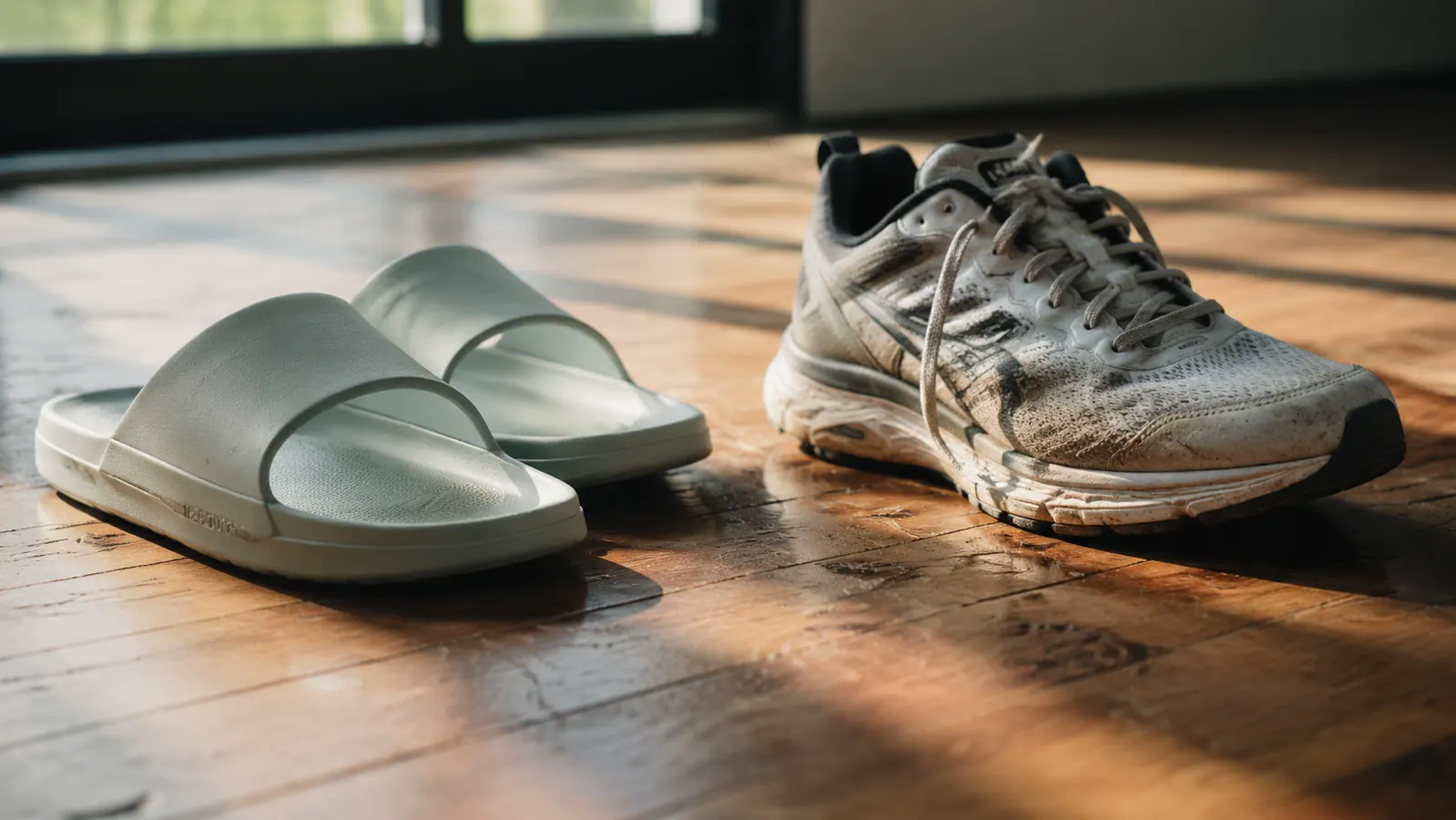
My feet were wrecked every single morning for almost a year. I run four days a week (nothing crazy, mostly 5Ks and the occasional 10K on weekends), and I work two 12-hour nursing shifts back to back most weeks. By the time I got home on those shift days, my arches felt like someone had spent the night pressing a thumb into them. I tried drugstore insoles. I tried rolling my foot on a lacrosse ball. I tried going barefoot more. Nothing moved the needle. Then a physical therapist friend told me to stop stepping into hard flip-flops the second I took off my running shoes, and to try a proper recovery slide instead. I picked up the OOFOS OOahh and wore them after every run and every long shift for the next six months. What I found was not a miracle, but it was genuinely significant.
I want to be upfront: I am not a podiatrist and I am not a gear reviewer by trade. I am a 38-year-old runner and nurse who was tired of hobbling to the coffee maker every morning. If you are in a similar spot, on your feet constantly and dealing with plantar fascia tightness that never quite goes away, this review is for you.
The Quick Verdict
The OOFOS OOahh delivers real, measurable relief for runners and people on their feet all day. The OOfoam cushioning is unlike anything in a standard sandal, and the arch contour actually does something. The tradeoffs are real but narrow: they look chunky, run slightly small, and cost more than a flip-flop. If your feet genuinely ache after training or a long shift, the recovery difference is worth the current price.
Amazon Check Today's Price →Still waking up with stiff, sore feet after every run? This is the slide that changes that.
The OOFOS OOahh uses a proprietary foam that absorbs 37% more impact than standard footwear materials. Over 32,000 verified buyers and a 4.4-star rating back up what I felt in month one. Check today's price and size availability below.
Amazon Check Today's Price on Amazon →How I Used Them: My Six-Month Testing Setup
I am a routine person, which made this easy to track. Every run day (Monday, Wednesday, Friday, and Sunday) I laced up my Brooks Ghost 15s, ran my miles, and then the moment I walked back through the door I slipped into the OOFOS OOahh. I wore them for the rest of the day: cooking, putting the kids to bed, watching TV, doing the dishes. On nursing shift days, I wore my compression socks and work shoes for 12 hours, then came home and immediately swapped into the OOFOS. I kept a simple note on my phone and scored my morning foot soreness from 1 to 10 every day for the full six months.
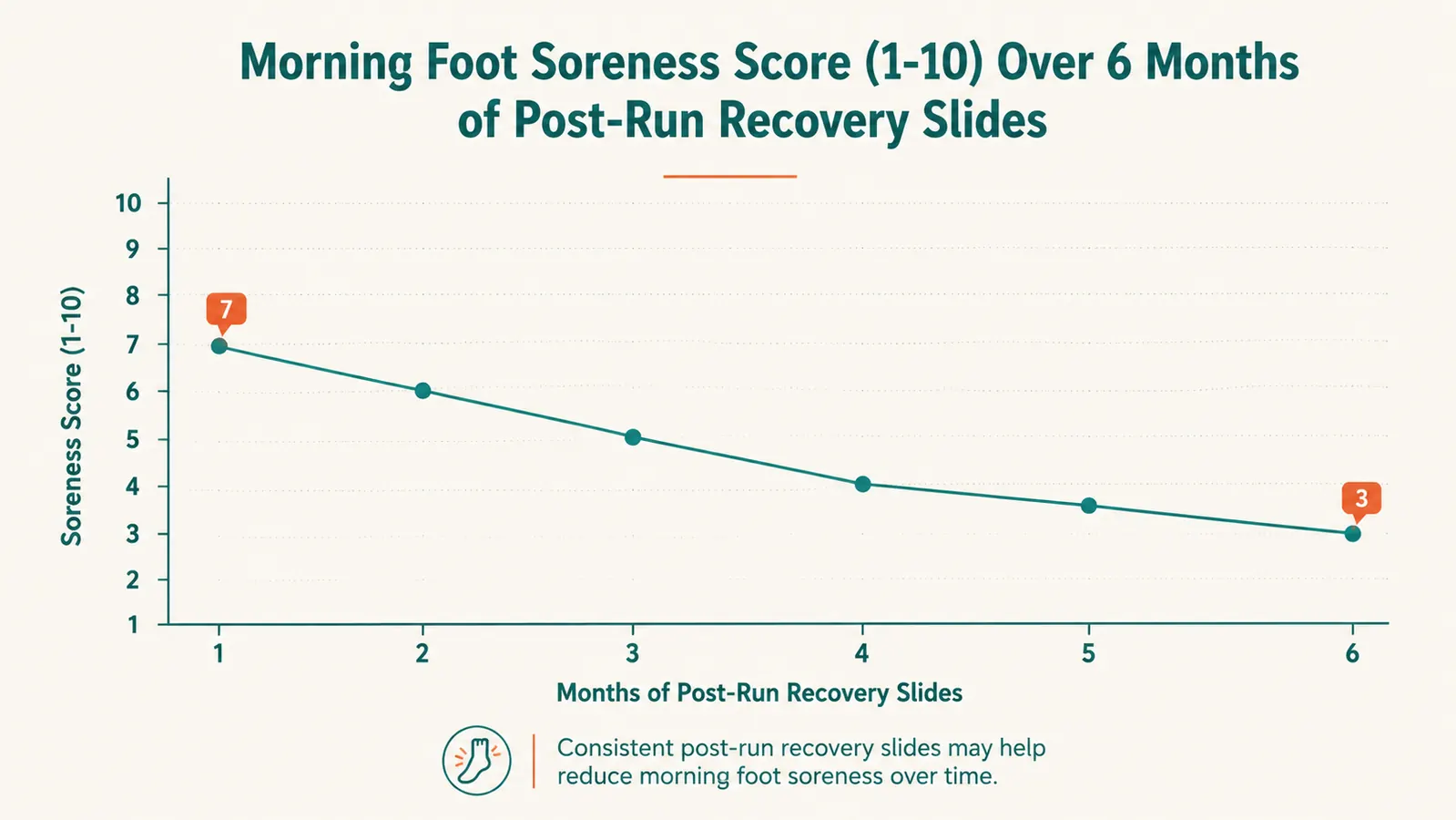
Starting baseline: my average morning soreness score in the two weeks before I started was a 6.8 out of 10. That is the number to beat. I was not in acute injury territory, but I was consistently uncomfortable every single morning, which meant my first 20 minutes of every day involved a slow shuffle until things loosened up. That is not how you want to start a 12-hour shift.
I wore a women's size 8 in my running shoes and ordered an 8 in the OOahh. The first thing I noticed: they run a tiny bit small. My toes sat right at the edge of the footbed. I would size up half a size next time, which is a minor frustration for a slip-on that should be simple to size. Within the first week, though, the foam felt broken in and I stopped noticing the fit issue.
What the OOfoam Actually Does to Your Feet (And Why It Feels Different)
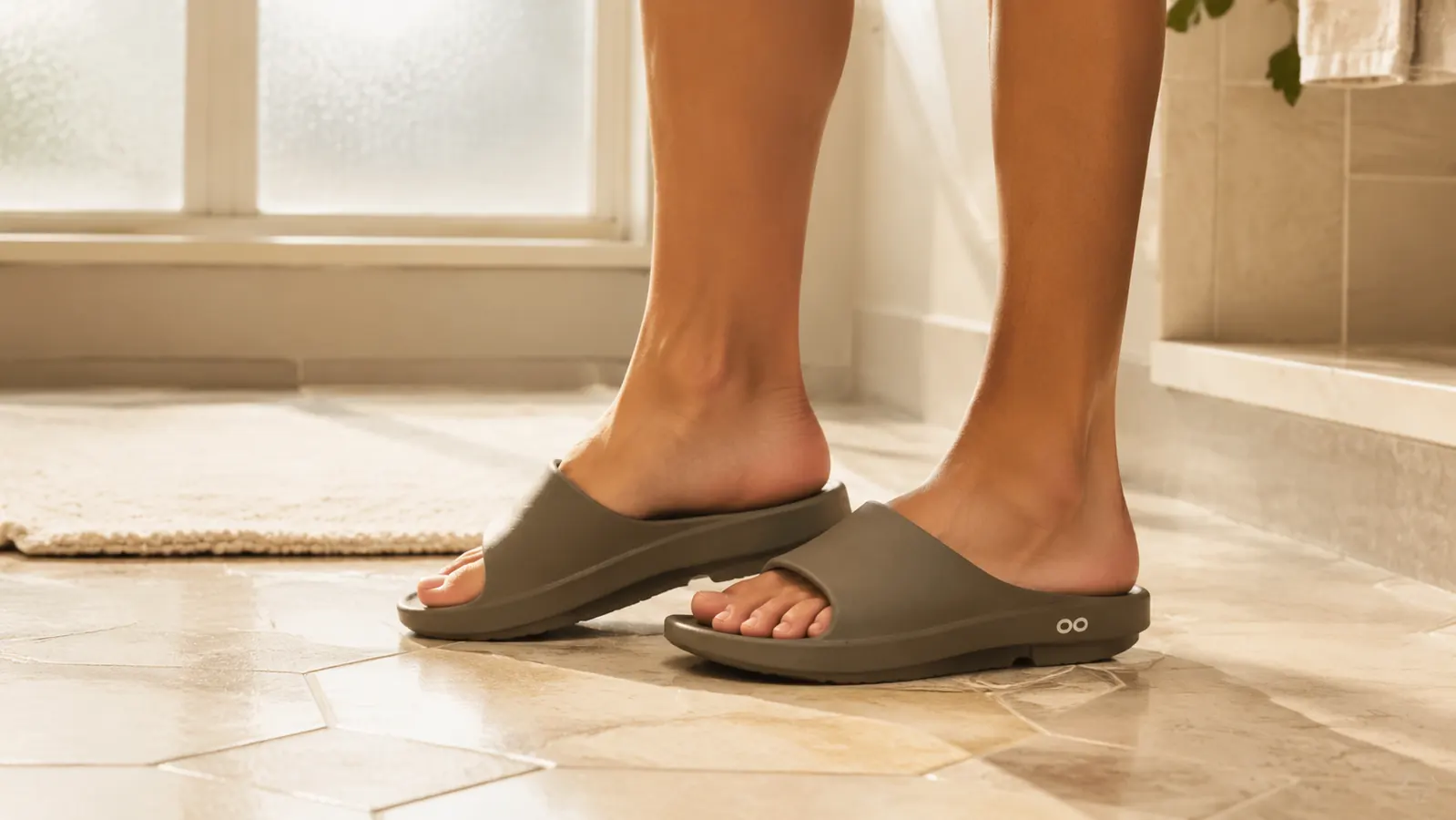
The OOFOS OOahh is built on a material called OOfoam, OOFOS's proprietary blend. The brand claims it absorbs 37% more impact energy than the materials used in most footwear. That number is easy to roll your eyes at until you actually stand in them for the first time. The footbed is thick, noticeably thicker than any flip-flop I have ever worn, and it has a pronounced arch curve that you actually feel supporting you. It is not a flat slab of foam. The arch contour sits under the middle of your foot and gently pushes back.
What this means in practice: when I put them on after a run, there is an immediate sensation of my foot being held and supported rather than just resting on a flat surface. The impact absorption becomes obvious if you walk on hard tile in regular flip-flops and then swap into the OOFOS. The hard slap against the floor is gone. Your heel meets the surface softly. For someone with plantar fascia irritation, where the first few steps after rest are the worst, that difference in landing quality matters a lot.
There is also a biomechanical angle that my PT friend explained: the arch contour in the OOahh is designed to reduce the range of motion in your ankle. That sounds strange, but for recovery it makes sense. After a run, you do not need your foot doing a lot of dynamic stabilization work. You want your muscles and connective tissue to rest, not keep working in loose footwear that forces constant micro-adjustments. The OOfoam holds your foot in a relatively neutral position and takes that stabilization work off your feet while you move around the house.
Month-by-Month: What Changed in My Recovery
Month one was the honeymoon period. My average soreness score dropped from 6.8 to 5.1. That is a real improvement but not a transformation. The mornings were slightly less stiff. The first few steps after sitting down for a while were less sharp. I noticed I was walking to the coffee maker without consciously bracing myself, which I had been doing without realizing it.
By month two, something shifted more meaningfully. Average soreness: 4.4. I had a long run of 8.5 miles on a Sunday, more than I usually do, and expected to be wrecked on Monday. I was not. My feet were tired but not painful. I want to be careful here: I was also being consistent with my post-run stretching during this period, so the OOFOS were not working alone. But the pattern was clear and the direction was consistent.
By month three I stopped thinking about my feet first thing every morning. That was the real win. Not a number on a chart, but the absence of something that used to be constant.
Months three through six showed a plateau that I think is honest and worth sharing. My soreness score settled around 3 to 3.5. It did not keep dropping to zero. I still feel tightness after very long runs or particularly brutal shift days. But the baseline improved significantly and stayed there. My six-month average morning soreness was 3.2, compared to a starting baseline of 6.8. That is a 53% reduction in reported soreness over a six-month window, which is meaningful in daily quality of life terms.
The Foam Deep Dive: What Makes These Different From a Regular Sandal
Most flip-flops, even nice ones from outdoor or athletic brands, use EVA foam. EVA is lightweight and inexpensive but compresses relatively quickly and does not offer much arch engagement. The OOFOS OOfoam is a closed-cell foam that is denser in specific areas (particularly the arch and heel) while remaining soft under the ball of the foot. You get cushioning where you need landing absorption and firmness where you need structural support. That combination is unusual in a slide.
The footbed shape also matters. If you look at the OOahh from the side, the heel is cupped slightly lower than the midfoot and forefoot. This puts your foot into a position that reduces strain on the plantar fascia by shortening the effective length of the fascial band under load. It is a subtle design choice you would never notice just by looking at the sandal, but it is the main reason these feel different from a Birkenstock or a foam pool slide. Both of those are flat platforms that look similar but do not address the same mechanical issues.
The strap on the OOahh is a single-piece molded foam band, not a thin rubber or fabric strap. It does not have any hardware or adjustment. That means it is extremely comfortable (no rubbing, no pressure points) but also means you cannot fine-tune the fit. If your foot is narrow or wide, you either fit or you do not. I have a medium-width foot and it worked fine, but I have a coworker with wide feet who found them uncomfortably tight across the toes.
Durability: What Six Months of Daily Wear Looks Like
I wore these slides roughly 200 to 220 days over the six months. They show wear on the outsole. There is visible scuffing on the heel and the tread pattern has smoothed out in high-contact zones. But the foam itself has not collapsed or deformed. The arch contour is still present and functional. The strap has not cracked or peeled. For daily use at this intensity, that is solid durability.
The outsole uses a rubber compound OOFOS calls OOgrip. It has held up well on wet tile, which matters because the most dangerous moment in a recovery slide is stepping out of the shower onto a wet bathroom floor. I have never slipped in these, which is not something I can say about every sandal I have owned. The grip on dry pavement is adequate but not exceptional. These are not meant for hiking or uneven terrain, and using them that way would wear the outsole much faster.
Pros and Cons
What I Liked
- OOfoam delivers genuinely different cushioning. Softer landings and real arch support, not just a thick slab of foam.
- Measurable soreness reduction with consistent post-run and post-shift wear over time
- No hardware on the strap means zero rubbing or pressure points anywhere on the foot
- OOgrip outsole performs well on wet tile and bathroom floors
- Foam has not compressed or deformed after 200-plus days of daily use
- Easy to wash. Rinse with water and mild soap, then air dry.
Where It Falls Short
- Runs slightly small. Size up half a size, especially if you have wide feet.
- The single molded strap offers no width adjustment, which is a real fit issue for wide or narrow feet
- They look chunky. The thick footbed is functional but not sleek, which matters if you want to wear them outside the gym.
- The current price is noticeably higher than a standard sandal. You are making a deliberate recovery investment.
- Not suitable for anything beyond light indoor and patio use
How They Compare to What I Was Using Before
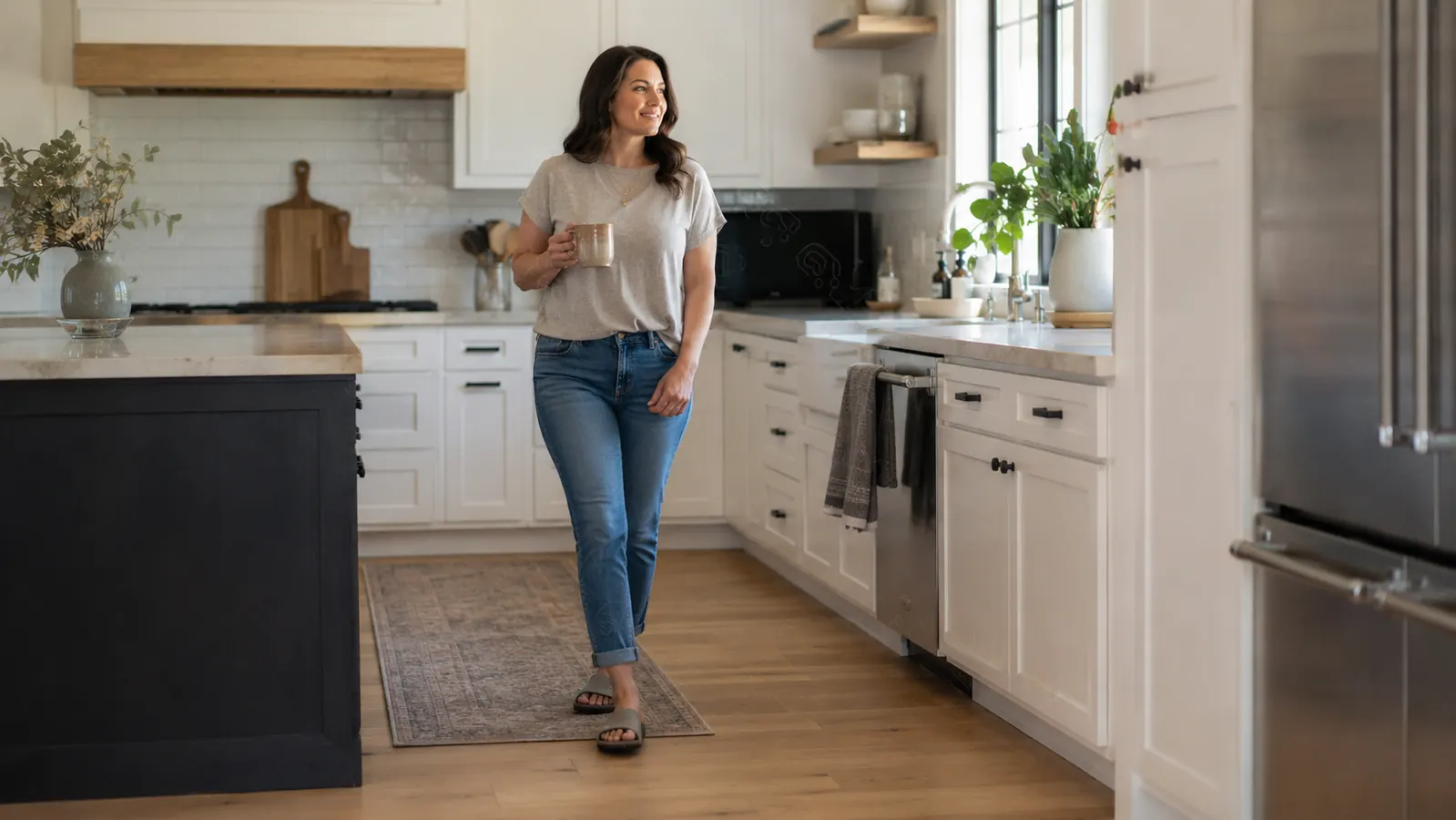
Before the OOFOS, I rotated between a pair of Old Navy flip-flops I had owned for three years and an old pair of Adidas slides I used as my gym bag sandal. Both are flat. Both put my heel and arch on essentially the same level surface with minimal cushioning. Both are fine for casual wear. Neither was doing anything for my feet after a run. The OOFOS OOahh felt noticeably different within the first five minutes of wearing it, and that is not something I expected to be able to say about a sandal.
If you want a more detailed side-by-side between the OOahh and the Hoka Ora Recovery Slide, which is the other well-known option in this category, I wrote a full comparison covering cushioning feel, arch profile, sizing, and who each one suits better. The OOFOS OOahh vs Hoka Ora piece goes deeper than I can cover here.
Who This Is For
The OOFOS OOahh is genuinely well-suited for runners who deal with recurring plantar fascia tightness and want a structured post-run routine, not just a comfortable sandal. It is equally good for nurses, teachers, and anyone else who spends 8 to 12 hours on hard floors. The key is consistent use: put them on the moment you take off your work shoes or running shoes and wear them for the rest of your active evening hours. That is where the cumulative benefit adds up. If you want more guidance on building that habit into a full daily routine, the guide on how to reduce foot soreness with recovery sandals walks through exactly how to do it.
They are also a solid choice if you are a weekend warrior who trains hard on Saturday and Sunday and needs to feel functional at work on Monday. The two-day soreness cycle is exactly what these are designed for.
Who Should Skip It
If you have a wide foot, try before you buy or be ready to return. The non-adjustable strap is the one legitimate design limitation and it is not fixable. If aesthetics are a major factor for you, if you want a recovery slide you can also wear to brunch or around town without looking like you just left the gym, there are sleeker options available. None of them have foam quite this good, but they exist. And if you are on a tight budget and just need something comfortable for around the house, you can find perfectly decent options for less. The OOahh is a deliberate purchase for people who take foot recovery seriously.
If you are not yet convinced that recovery footwear makes a real difference, the breakdown of 10 reasons recovery slides belong in every athlete's bag covers the physiology behind post-workout footwear and why it matters more than most people assume.
Six months in, I still reach for these the moment my shoes come off. That consistency tells you everything.
The OOFOS OOahh has over 32,000 Amazon reviews and holds a 4.4-star rating across all of them. Runners, nurses, teachers, and gym-goers all show up in those reviews with the same story: the feet feel better in the morning. Check today's price and confirm your size is available. Size up half a size if you are between sizes or have a slightly wide foot.
Amazon Check Today's Price on Amazon →