
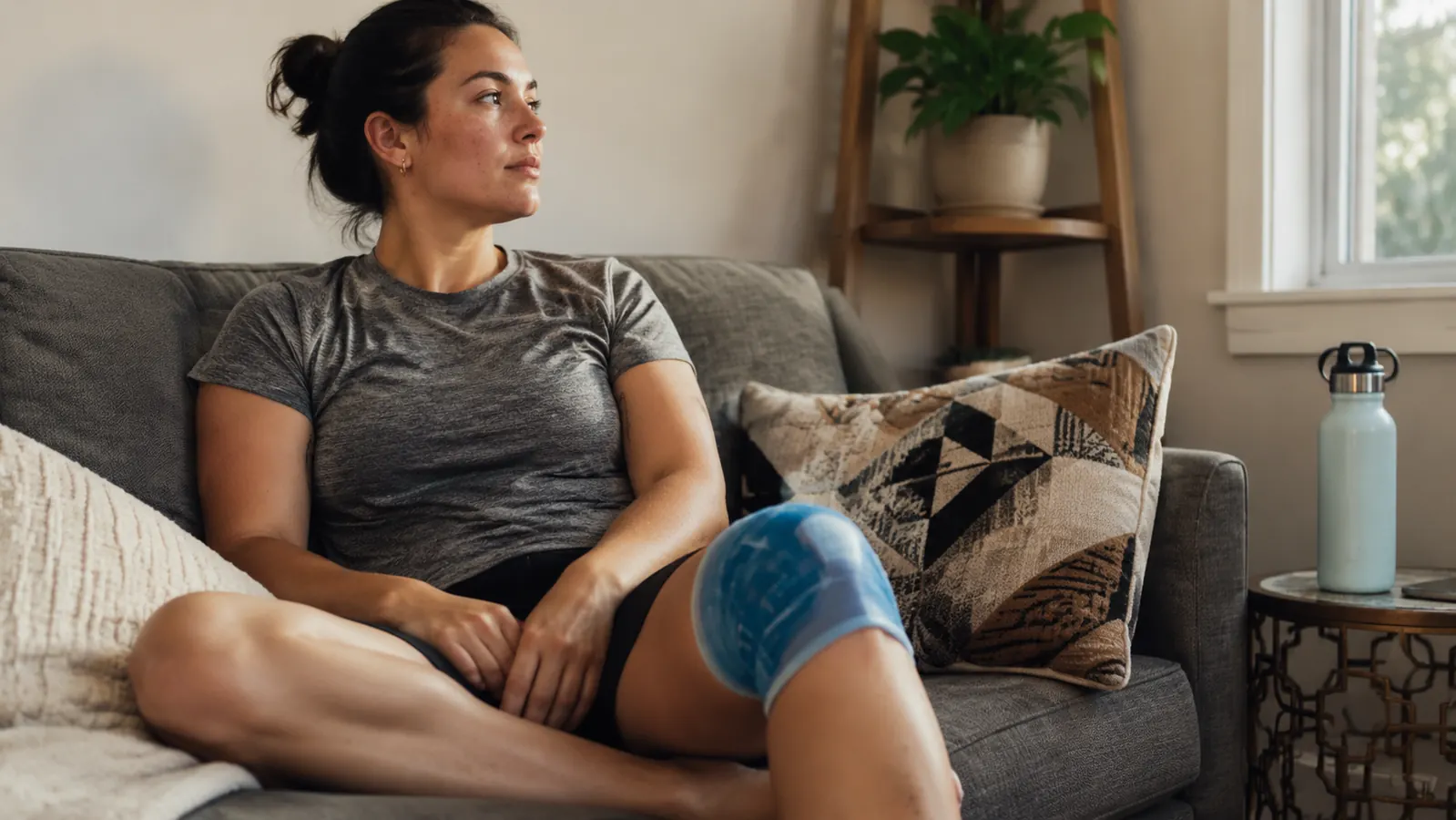
You finished a hard leg day. Your knees are aching, your quads feel like they were wrung out, and somebody in a fitness group swore that an ice bath would fix everything. So you Google it. And then you see what a real cold plunge actually requires: a giant tub, 40 pounds of ice from the gas station, fifteen minutes of sitting in 50-degree water while your toes go numb, and a shower afterward to warm back up. On a Tuesday night. After a 10-hour nursing shift. The REVIX ice pack wrap is the other option, and for most real people with real schedules, it gets the job done without any of that production.
That said, ice baths are not useless. There are specific situations where full-body cold immersion makes sense. This comparison lays out exactly when each option wins, based on what the research actually says and what works when you have 20 minutes and a household freezer.
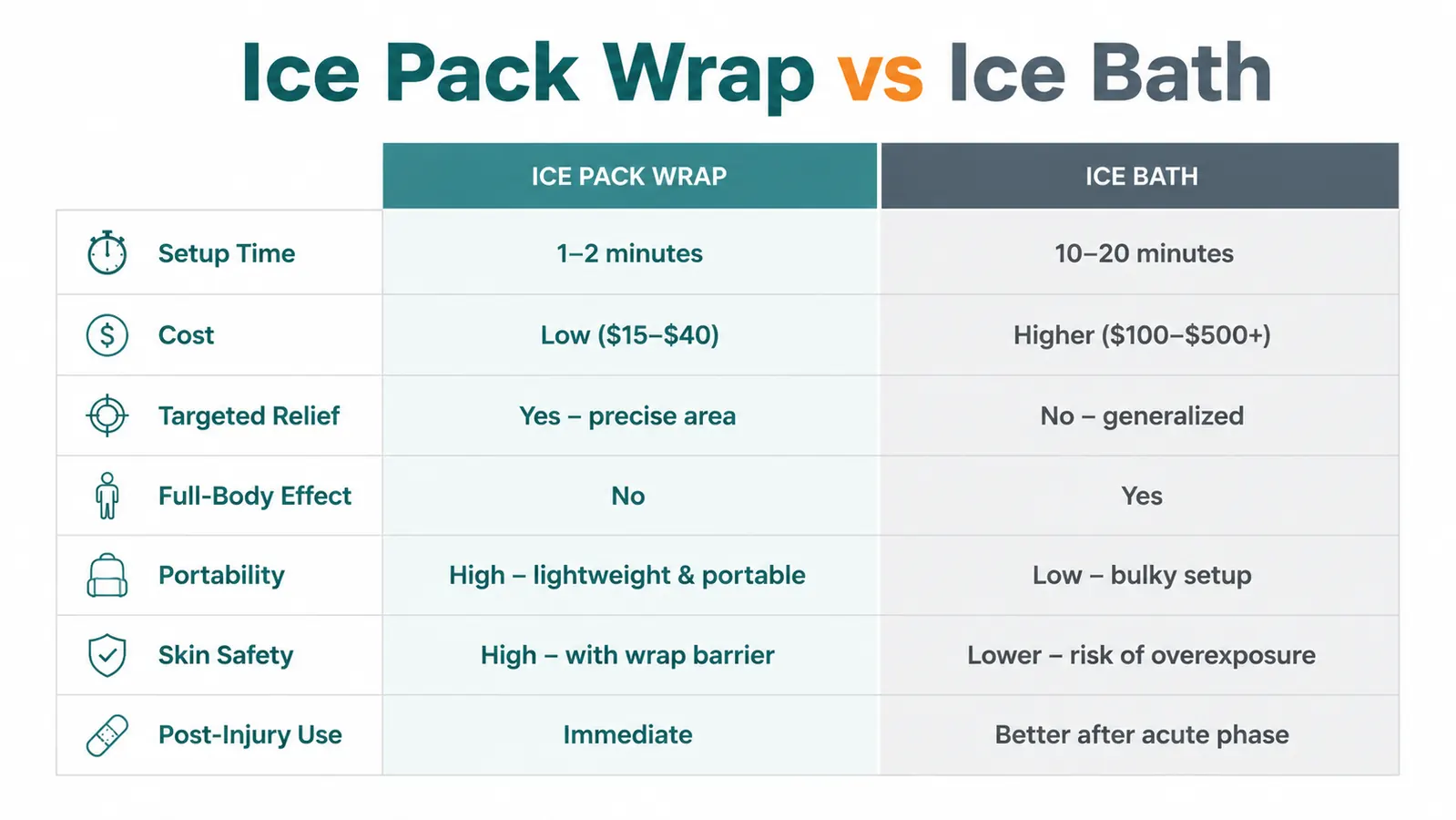
| Ice Pack Wrap | Ice Bath for Recovery | |
|---|---|---|
| Setup Time | Under 2 minutes (grab from freezer, strap on) | 15 to 30 minutes (fill tub, bag ice, wait to cool) |
| Upfront Cost | One-time purchase | Free for a DIY tub, or significantly more for a dedicated cold plunge unit |
| Targeted Relief | Excellent. Wraps directly around the knee, hip, or shoulder for focused cold. | Poor for spot relief. Whole-body cooling with no joint targeting. |
| Full-Body Recovery | Limited to the wrapped area only. | Strong. Lowers core temp and reduces systemic inflammation across all muscle groups. |
| Portability | Fits in a gym bag or large purse. Use it anywhere. | Requires a tub, space, and a water source. Not portable. |
| Cold Duration | Holds cold 20 to 30 minutes per session. | Stays cold as long as you keep adding ice. |
| Risk of Skin Damage | Low. Gel wrap has a fabric barrier. Sessions are 15 to 20 minutes. | Moderate to high if water temperature is too low or session runs too long. |
| Post-Surgery or Injury Use | Yes. Clinical design, often recommended by PTs for knee recovery. | Generally no. Too aggressive for a recent injury or post-op tissue. |
| Solo Application | Yes. Velcro straps make it easy to put on alone. | Technically yes, but monitoring is safer with someone nearby. |
Where the REVIX Ice Pack Wrap Wins
The single biggest advantage of a targeted cold wrap is specificity. When your knee swells after a hard run or your shoulder flares up after pressing day, the inflammation is local. Cooling your whole body to address one joint is like running your home's entire air conditioner because one room is warm. The REVIX wrap concentrates cold therapy exactly where you need it, compresses the tissue to reduce swelling, and stays in place while you sit on the couch or watch your kids. No tub required, no ice run, no setup ritual.
The RICE protocol (rest, ice, compression, elevation) has been a staple of athletic recovery for decades, and the REVIX wraps apply all three physical components at once. The gel pack conforms to the contours of the knee or other joint better than a flat bag of frozen peas, which means more consistent cold contact across the whole affected area. Over 24,000 reviewers on Amazon back this up, with a 4.6-star average that skews heavily toward people with knee pain, post-surgical recovery, and post-workout soreness. It holds cold for 20 to 30 minutes per session, which matches the clinical recommendation for a single icing round.
For busy parents, nurses, shift workers, and anyone who trains but also has a life afterward, the convenience factor is not a small thing. You pull it from the freezer, strap it on in under two minutes, and keep going with whatever is next on your plate. That is a recovery tool you will actually use consistently, and consistency is what drives real results over weeks and months of training.
Sore knee or swollen joint after training? This is what 24,000+ people use instead of a tub of ice.
The REVIX reusable gel ice wrap applies cold and compression to your problem spot in under two minutes. No tub, no ice run, no production. Grab it from the freezer and strap it on.
Amazon Check Today's Price on Amazon -> →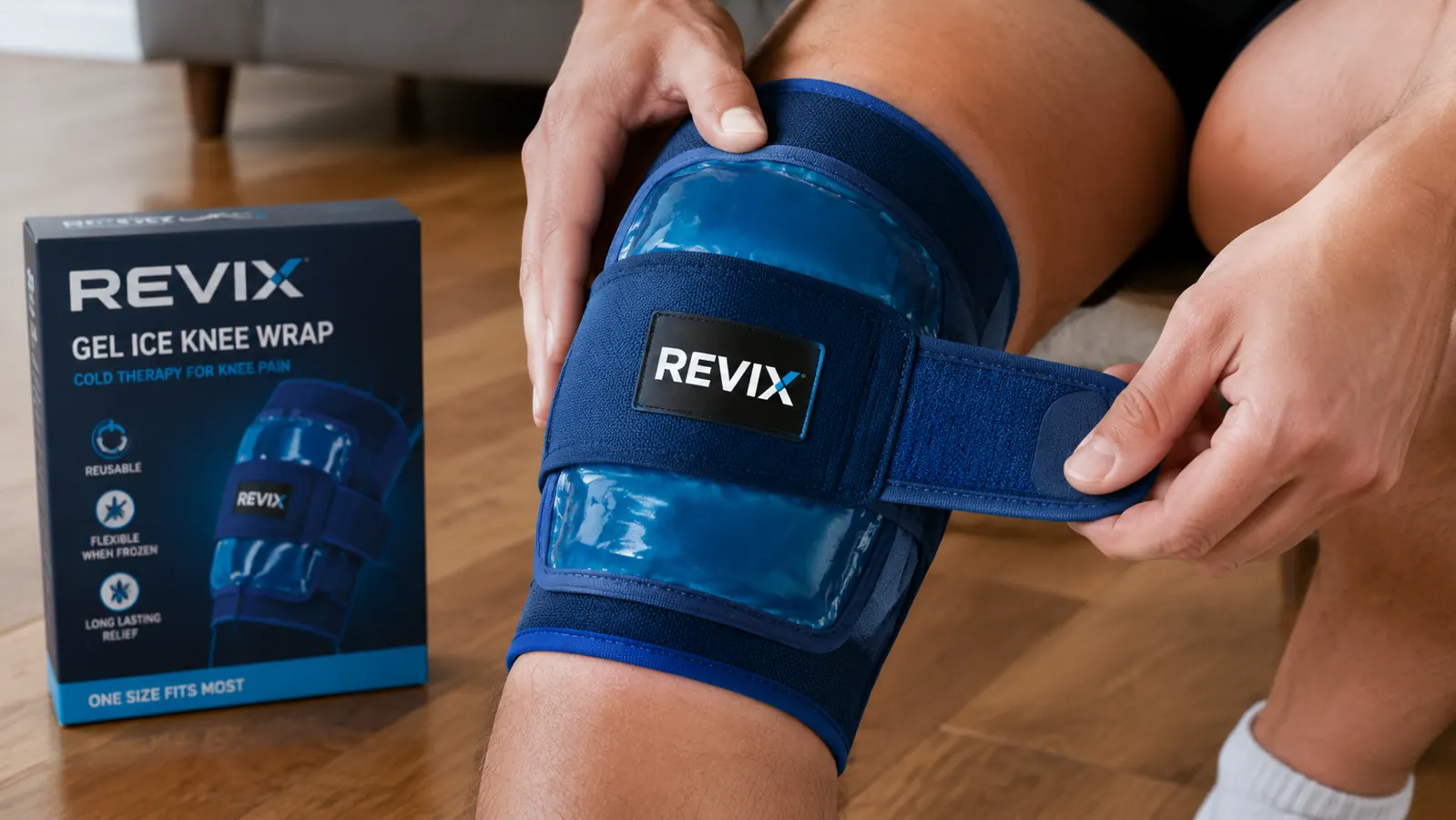
Where the Ice Bath Wins
Ice baths do have a genuine advantage, but it applies in a fairly specific context. When your whole body is systemically fatigued rather than one joint, full cold immersion reduces core body temperature and circulating inflammatory markers across every muscle group at the same time. Elite endurance athletes who log 20-plus mile training weeks or cyclists who stack back-to-back hard sessions in multi-day events often report that ice baths help them feel recovered faster for the next day's output. If you are training at that volume and have access to a tub, a large supply of ice, and the willingness to spend 10 to 15 minutes in genuinely cold water, there is real science supporting the approach.
There is one important caveat the ice-bath crowd tends to skip: newer research suggests that when hypertrophy (muscle building) is the goal, full cold immersion after resistance training can blunt the signaling pathways responsible for muscle protein synthesis. In plain terms, if you are lifting to get stronger or bigger, taking a full ice bath immediately after every strength session may slow your gains over time. Targeted cold wraps applied to a specific sore joint do not carry that same systemic concern. This distinction matters a lot for lifters, especially those training 3 to 4 days per week with progressive overload.
For most people training 2 to 4 days a week with one or two sore spots, a cold wrap delivers 90 percent of the recovery benefit in 5 percent of the time, with none of the ice-run logistics.
What the Research Actually Says
Cold therapy reduces post-exercise inflammation through vasoconstriction: blood vessels narrow under cold, which limits fluid buildup in injured or overworked tissue. When you remove the cold, vessels dilate and blood flow returns, flushing metabolic waste products. Both a cold wrap and an ice bath trigger this mechanism. The difference is scope. A 2017 review in the Journal of Physiology found that cold water immersion was effective at reducing DOMS in the 24 to 96 hour window post-exercise, but was most beneficial for endurance athletes rather than strength athletes. A 2022 analysis found that local cold application produced comparable results for reducing localized swelling and pain, with significantly less physiological stress on the body overall.
The REVIX wrap is built for exactly that local application. The gel pack is pre-filled and does not require water, so there is no mess and no risk of the bag cracking open mid-session. The compression strap keeps it snug against the joint, and the fabric liner between gel and skin prevents the kind of direct-contact irritation that happens when people apply ice directly. For the vast majority of recreational athletes dealing with a sore knee, a tight IT band, a cranky hip flexor, or post-run ankle inflammation, this is the right tool for the job.
A Note on the Practical Reality of Ice Baths
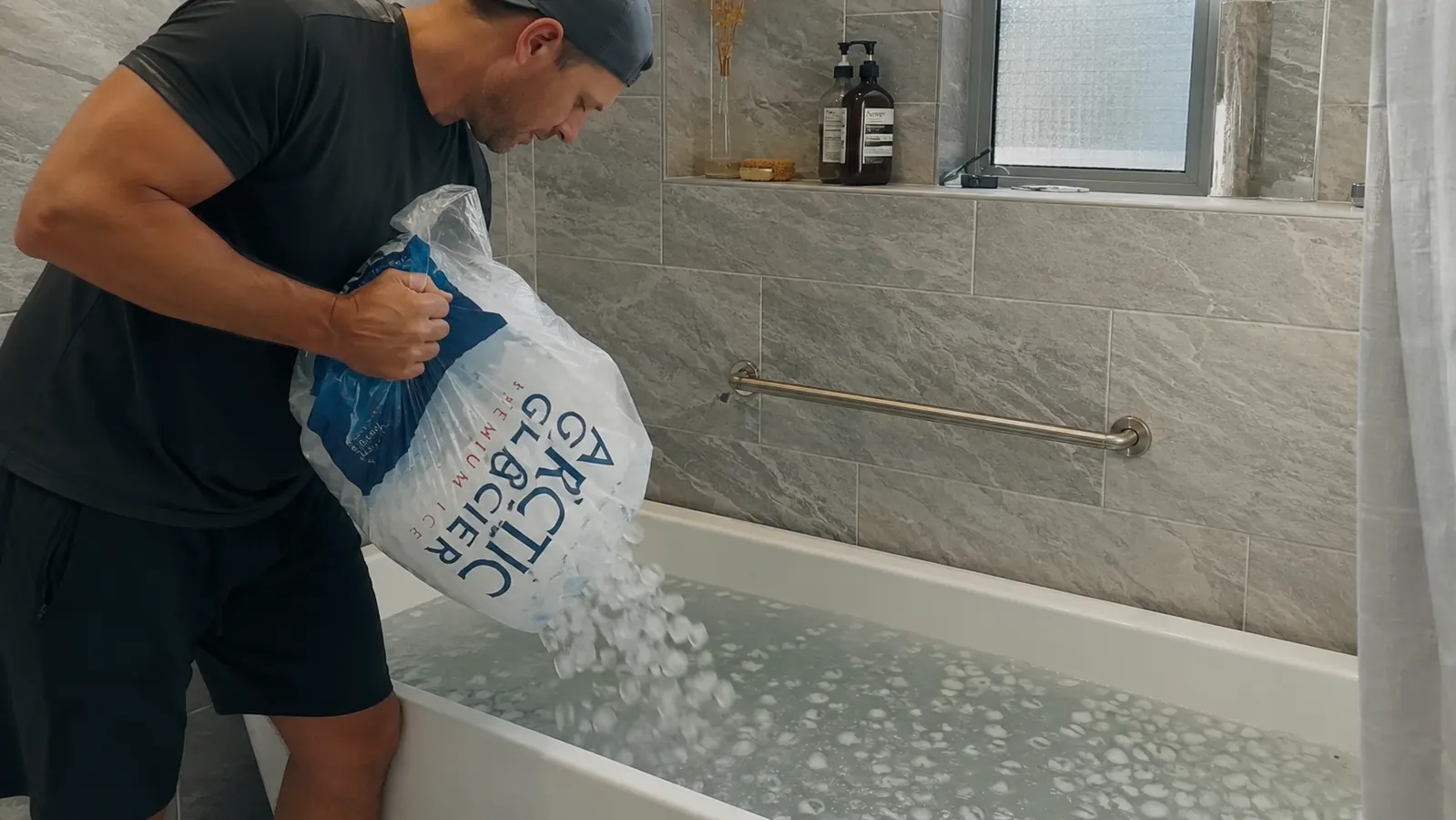
Part of why ice baths dominate fitness social media is that they look impressive. You see a pro athlete sitting in a tub of ice and it signals commitment and toughness. That social proof has convinced a lot of recreational athletes to attempt the same protocol even when their training load does not call for it. A nurse who works a 12-hour floor shift and then gets to the gym three times a week does not have the same recovery needs as an Olympic marathon runner in training camp. The tool should match the stress, not the aesthetics.
The other practical issue is access. A dedicated cold plunge unit costs anywhere from mid-range to premium pricing. A DIY tub setup requires a bathtub you can actually fill with cold water (not always possible in apartments or shared housing), plus ice you have to buy, carry home, and store. The REVIX wrap lives in your freezer and is ready to go from day one. That gap in friction matters more than most people realize. The best recovery tool is the one you actually use after every single session, not the one that requires 30 minutes of setup on a weeknight when you are already tired.
Who Should Buy the REVIX Ice Pack Wrap
This is the right choice if you train 2 to 5 days per week and have one or two areas that consistently bother you after workouts. If your knees swell after leg day, your shoulder gets sore after upper body sessions, or you run and your ankles and calves need regular attention, a targeted gel wrap is more practical and more effective for your specific situation than a full ice bath. It is also the clear winner if you are recovering from a procedure like knee surgery or a minor injury where a physician or physical therapist has recommended cold and compression. The REVIX wraps are specifically designed and reviewed for that use case.
You will also appreciate this if you train at odd hours, live with family or roommates who share a bathroom, or simply do not want the ongoing cost and hassle of buying ice. One purchase, one tool, one step. Put it in the freezer when you unpack it and it is ready every single time you need it.
Who Should Consider an Ice Bath Instead
If you are an endurance athlete logging genuinely high training volume, running marathons, or doing triathlon-level work where your entire body takes a beating across multiple sessions per week, and you are not specifically trying to maximize strength or hypertrophy, an ice bath can be worth the setup. The same applies if you are a coach or athlete who needs to feel recovered for a competition the following day and the priority is output tomorrow rather than long-term muscle adaptation. In those narrow cases, the systemic effect of full cold immersion is worth the effort and the inconvenience.
Most people reading this, though, are weekend warriors, parents juggling three things at once, nurses and teachers whose jobs are already physically demanding, or recreational lifters who train consistently without elite volume. For that group, the ice bath is not the better option. It is just the more inconvenient one.
Who Should Buy Which
Buy the REVIX ice pack wrap if you have one or two spots that routinely ache after training, if you want a recovery tool that is ready in under two minutes, if you are in a post-surgical or injury recovery phase, or if you are a strength-focused lifter who does not want to blunt muscle adaptation. It costs less than a weekly bag of gas-station ice, and you only pay for it once.
Consider adding occasional ice bath sessions if you are training at high endurance volume, have a dedicated tub setup, and are specifically trying to accelerate recovery for next-day performance rather than long-term strength gains. Even then, keep a cold wrap around for the targeted joint work that a full tub cannot replicate as precisely.
Most people recover smarter with a targeted cold wrap than a tub full of ice. Here is the one with 24,000 reviews.
The REVIX reusable gel ice wrap is designed for knee, hip, and joint recovery after training. Compression plus cold therapy in under two minutes, no tub required. Check today's price on Amazon.
Amazon Check Today's Price on Amazon -> →