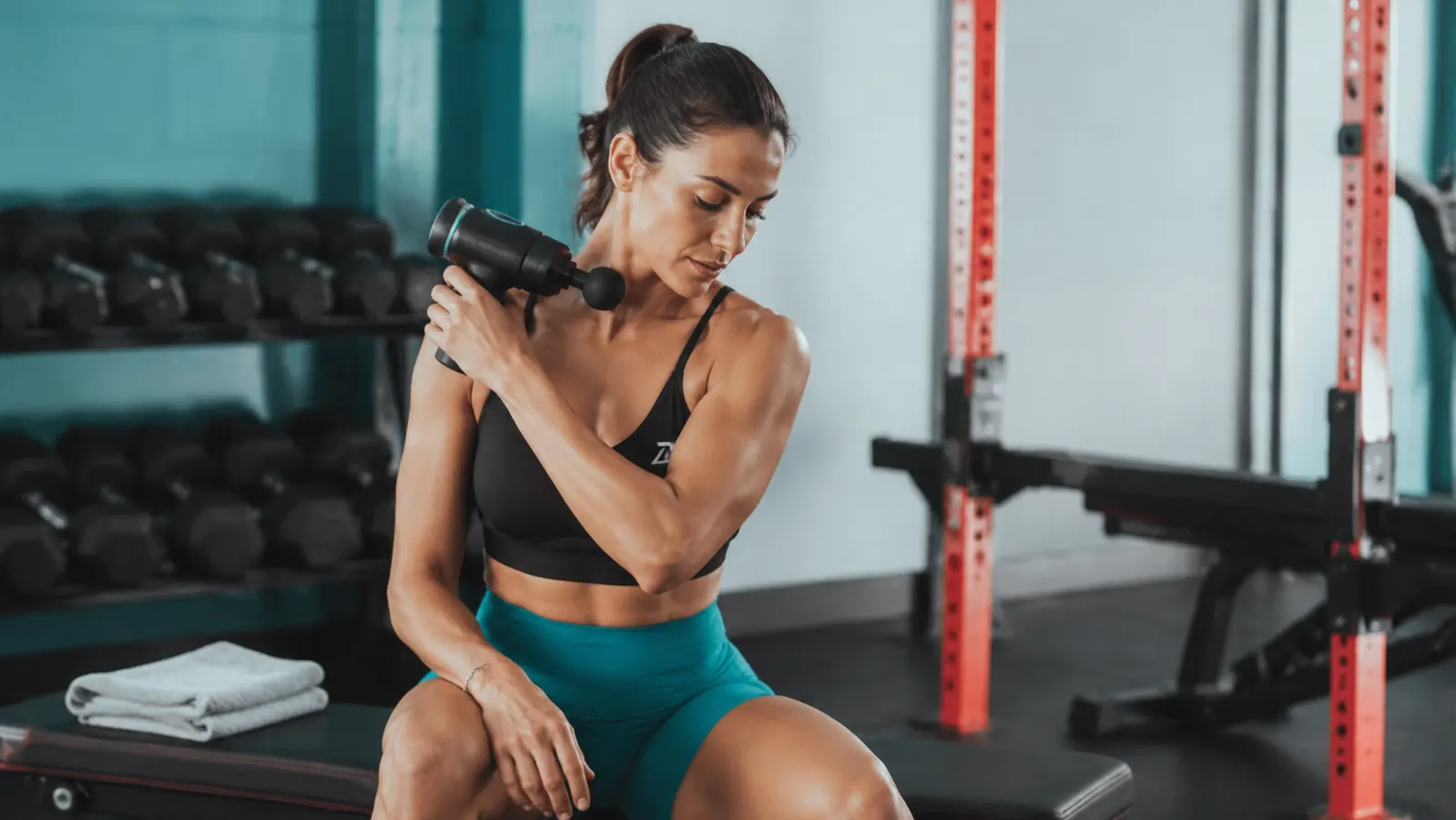
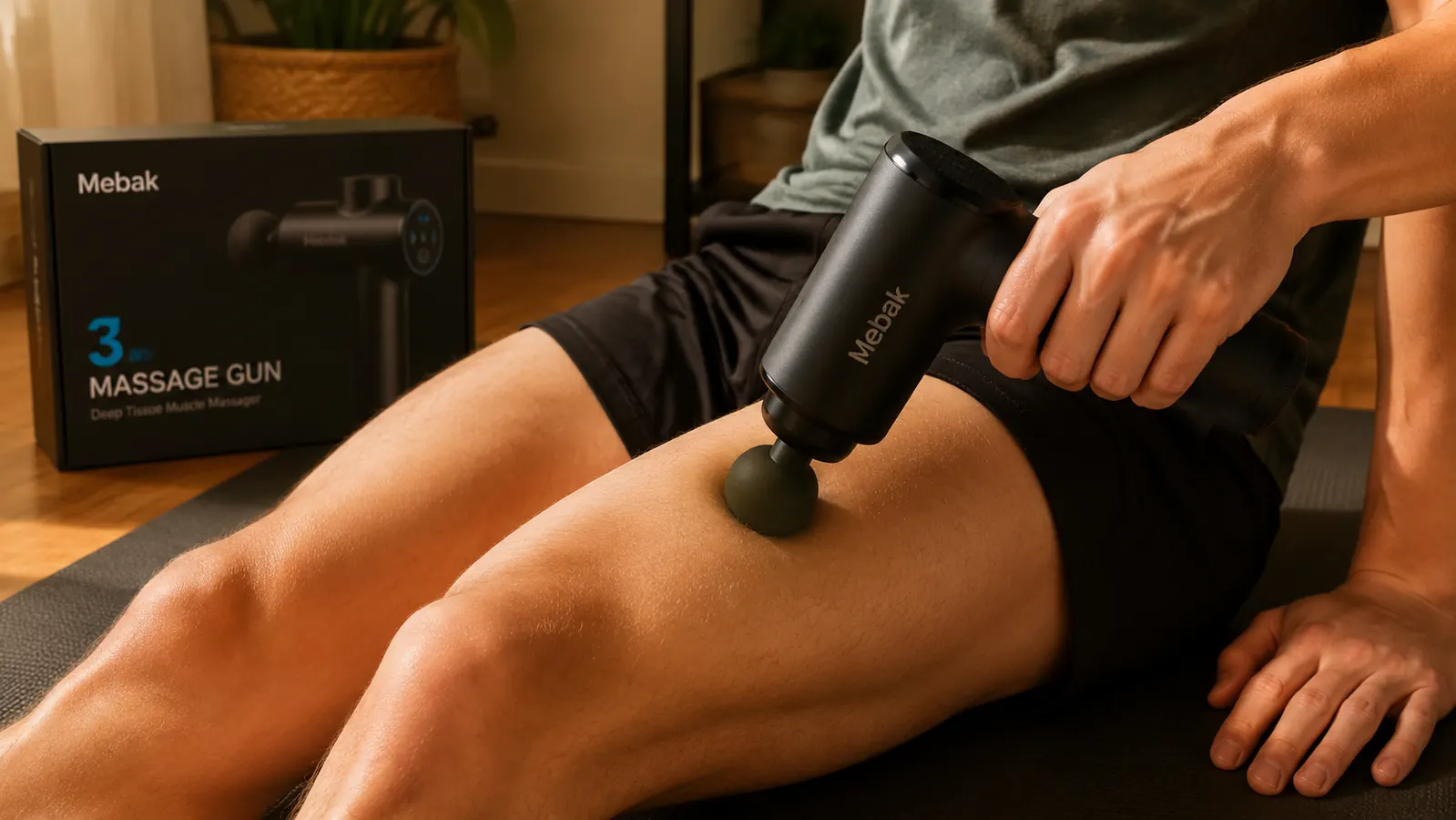
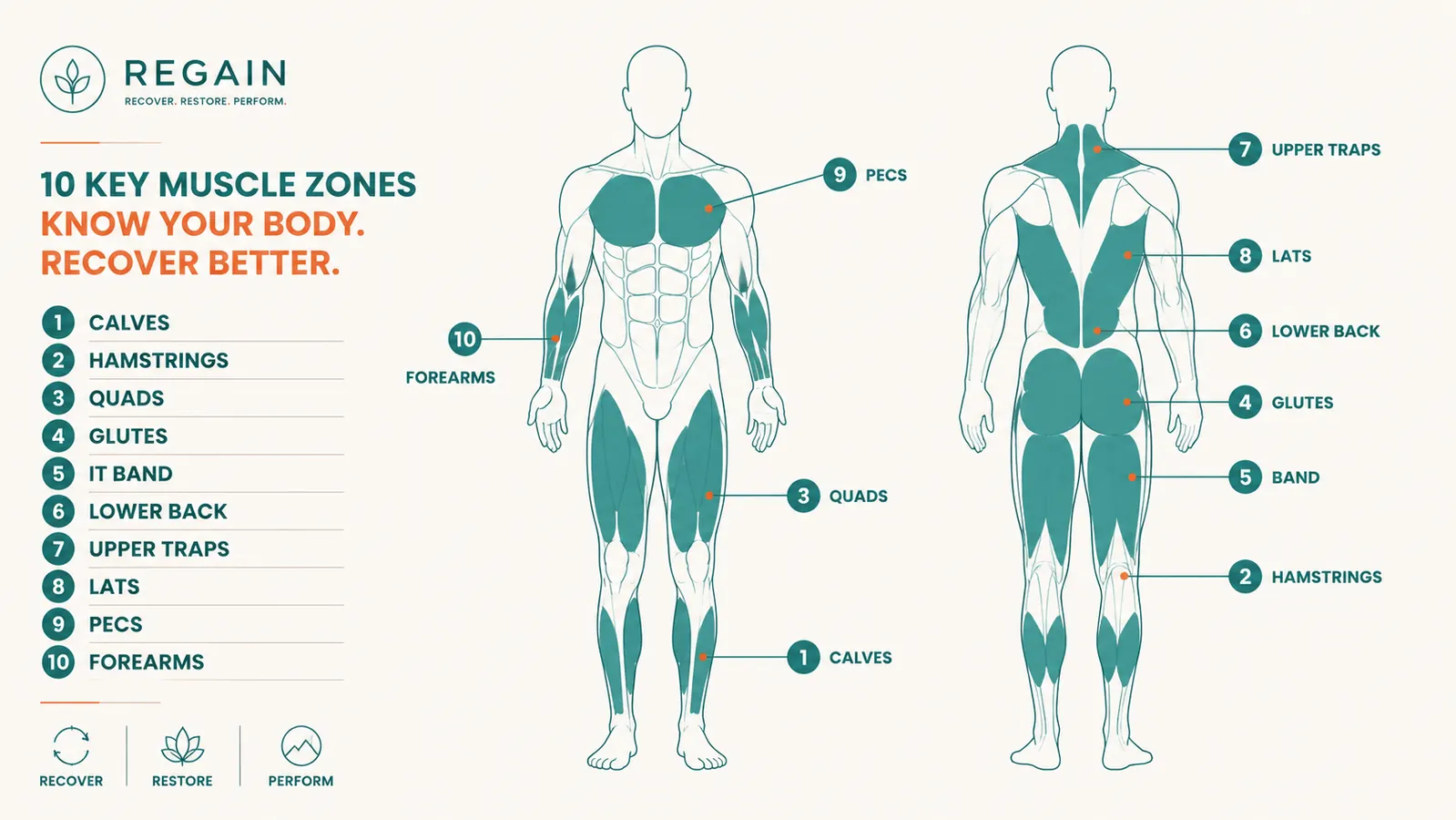
If you have a percussion massage gun and you are mostly running it up and down your calves and calling it done, you are leaving a lot of recovery on the table. The massage gun is not magic by itself. But when you know the specific muscle groups that carry the most tension after training, running, or a long shift on your feet, it becomes one of the fastest recovery tools you own. I use the Mebak 3 percussion massage gun daily, and these are the 10 spots that actually make a difference.
None of these require a professional. Two minutes per spot, medium pressure, and you will feel the difference by the next morning. Here is exactly where to point it.
Your soreness has a map. The Mebak 3 is how you work through it.
4.7 stars and over 19,000 reviews from people who needed real recovery on a real schedule. Quiet motor, six attachment heads, and enough battery life for a full week of post-workout sessions on a single charge.
Amazon Check Today's Price on Amazon →Calves
This is the obvious one, but most people rush it. Your calves absorb impact on every step, every squat rep, every jump. After leg day or a run, they are often the tightest thing on your body even when they do not hurt yet. Use the round ball attachment on the Mebak 3 and work from the top of the calf down to the Achilles slowly. Two minutes per leg, medium speed. Nurses and shift workers: this one is especially for you.
Hamstrings
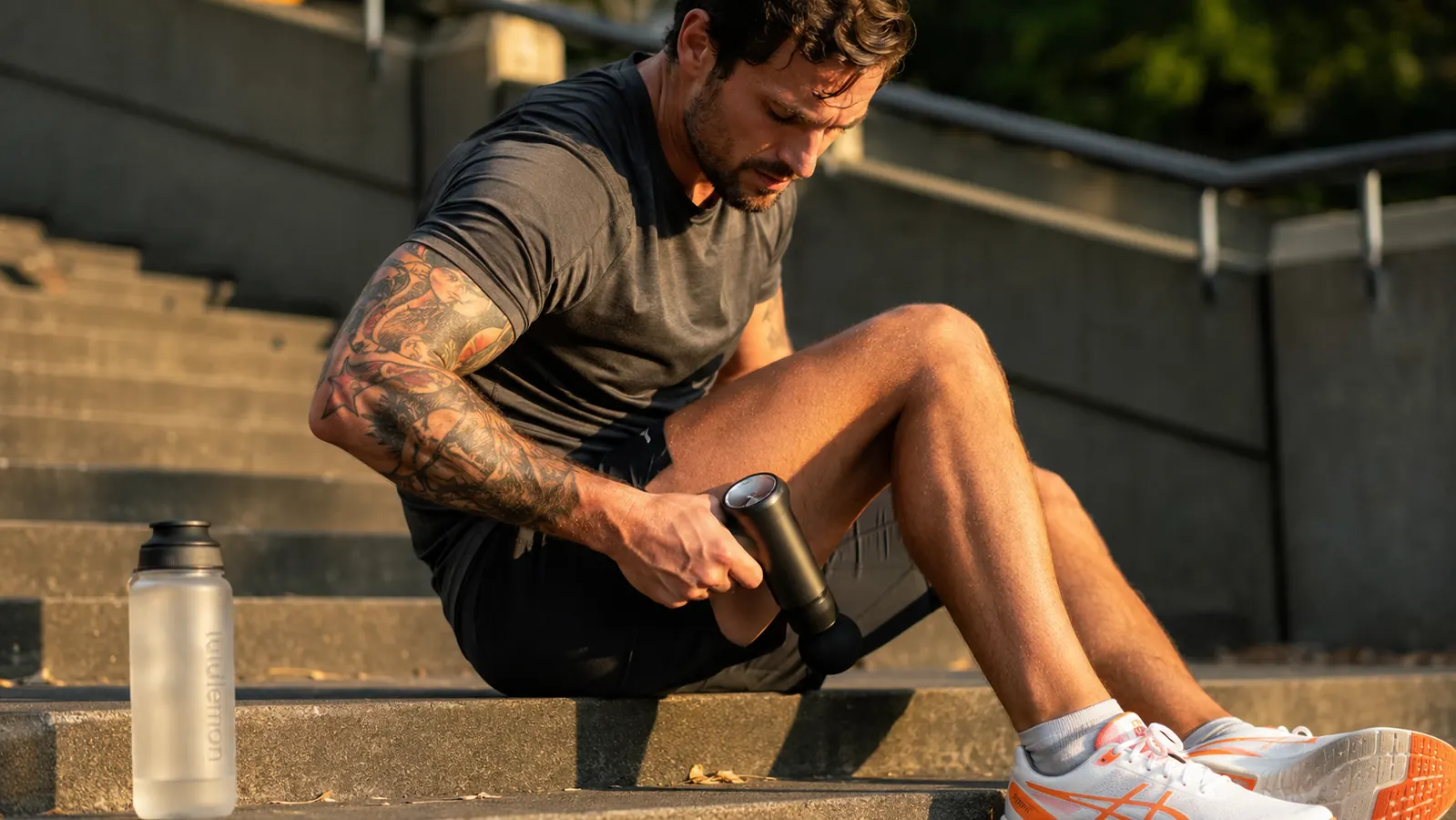
Tight hamstrings are behind more lower back pain, knee discomfort, and stiff mornings than most people realize. Sit on a chair or bench and let the back of your thigh relax completely. Run the massage gun slowly along the full length of the muscle, not just the spot that hurts. If you sit for long stretches at work or in a car, your hamstrings are probably shortened before you even start training. Two to three minutes per side makes a genuine difference in how your legs feel the next day.
Quadriceps
After squats, lunges, stair climbs, or a long hike, the quads hold on to tension for hours. Lie on your side or sit upright with your leg relaxed and work the outer quad, the middle, and the inner quad as three separate passes. Do not press hard on the bone. Stay on the muscle belly. The Mebak 3's flat head works well here. If your quads are sore the morning after leg day, five minutes with a percussion massage gun before bed the night of training can shorten that soreness window noticeably.
Glutes
Most people skip this because it feels awkward. Do not skip it. Your glutes are the largest muscle group in your lower body, and when they stay tight they pull on your hips, your lower back, and your knees. Lie on your side with your top leg slightly bent and work the glute from the hip toward the tailbone. The Mebak 3 has enough amplitude to reach deep tissue here without requiring painful pressure. Two minutes per side.
IT Band and Outer Hip
The IT band itself is connective tissue, not muscle, so you do not want to beat on it directly. But the tensor fasciae latae (the muscle that feeds into it at the hip) and the surrounding outer thigh respond well to percussive work. Run the massage gun along the outer hip, just below the hip bone, and into the upper outer thigh. Runners and cyclists: this is where a lot of your knee pain actually starts. Two to three minutes here after a long run beats foam rolling for most people in terms of time investment.
The spots that hurt the most are usually not the spots that need the most attention. Work the whole muscle, not just the knot.
Lower Back (Paraspinals)
Stay off the spine itself and work the thick muscles that run alongside it, roughly one to two inches out from the center. These paraspinal muscles take the load during deadlifts, loaded carries, rowing, and any time you are bending or lifting on the job. Use a low to medium speed and keep the gun moving. Do not park it in one spot on your lower back. If your lower back tightness is chronic, also check out our guide to how to use a percussion massage gun for deep tissue relief without overdoing it.
Upper Trapezius and Neck Base
This is where desk workers, drivers, parents carrying kids, and nurses who chart on their feet all hold stress. The upper traps sit across the top of your shoulders and up into the base of your neck. A percussion massage gun here feels almost immediate. Use the round ball attachment on medium speed and work the ridge from the shoulder toward the neck slowly. Avoid the neck itself. Even two minutes here before bed can noticeably improve how your shoulders and head feel the next morning. The Mebak 3 is quiet enough that you can use it while watching TV or unwinding after a shift.
Lats (Latissimus Dorsi)
The lats are the big wing muscles on either side of your mid-back, and they are chronically tight in anyone who does pull-ups, rows, or overhead pressing. They also get locked up when you sit hunched at a desk. Reach the gun around your side and work from the armpit down toward the lower back. You can also lie on your side and let a partner or a tabletop handle the angle. Loose lats mean a better overhead position, easier shoulder mobility, and less pulling sensation in your mid-back.
Pecs and Front of Shoulder
Tight pecs are behind the rolled-forward posture that most people who train, drive, or use a keyboard develop over time. The pec minor and the front of the shoulder capsule specifically get shortened and stuck. Sit upright and run the massage gun slowly across the upper chest, just below the collarbone, and into the front of the shoulder. Use light to medium pressure. This is one that most people never think to hit, but after a pressing session or a long day at a computer it can make a real difference in how your shoulders feel.
Forearms
Climbers, lifters, nurses who chart by hand, anyone who types or grips a lot, this one is for you. The forearm flexors and extensors accumulate a remarkable amount of tension that never quite gets released unless you address it directly. Lay your forearm on a table palm up, rest the massage gun on the fleshy part of the inner forearm, and let the percussion do the work while you move it slowly toward the elbow. Then flip it and do the outer forearm. Two minutes per arm. If you have ever noticed your grip feeling weak or your wrists aching after a long session, tight forearms are often a big part of why.
What I Would Skip (Or Use Carefully)
A few areas to avoid or approach with real caution: the spine itself (stay on the muscles beside it, not on the vertebrae), the front of the neck, behind the knee, and any area where you have a recent injury, bruise, or swelling. A percussion massage gun is not a substitute for medical care, and if something is acutely painful or inflamed, cold therapy or rest is the right call first. For more on technique and timing, read our full guide on how to use a percussion massage gun for deep tissue relief.
A massage gun is most useful right after training or right before bed, when muscles are warm and you are ready to let them release.
Ten muscle groups. One tool. The Mebak 3 handles all of them.
Rated 4.7 stars by over 19,000 buyers. Six interchangeable heads, a quiet motor you can use at 10pm without waking anyone up, and a battery that lasts all week. If you are already sore and you want to feel better by tomorrow morning, this is a reliable place to start. Want to read a full breakdown first? Check out our <a href="/mebak-3-massage-gun-honest-review" rel="noopener">honest Mebak 3 review</a> and our <a href="/mebak-3-massage-gun-review-long-term" rel="noopener">long-term use report</a>.
Amazon Check Today's Price on Amazon →