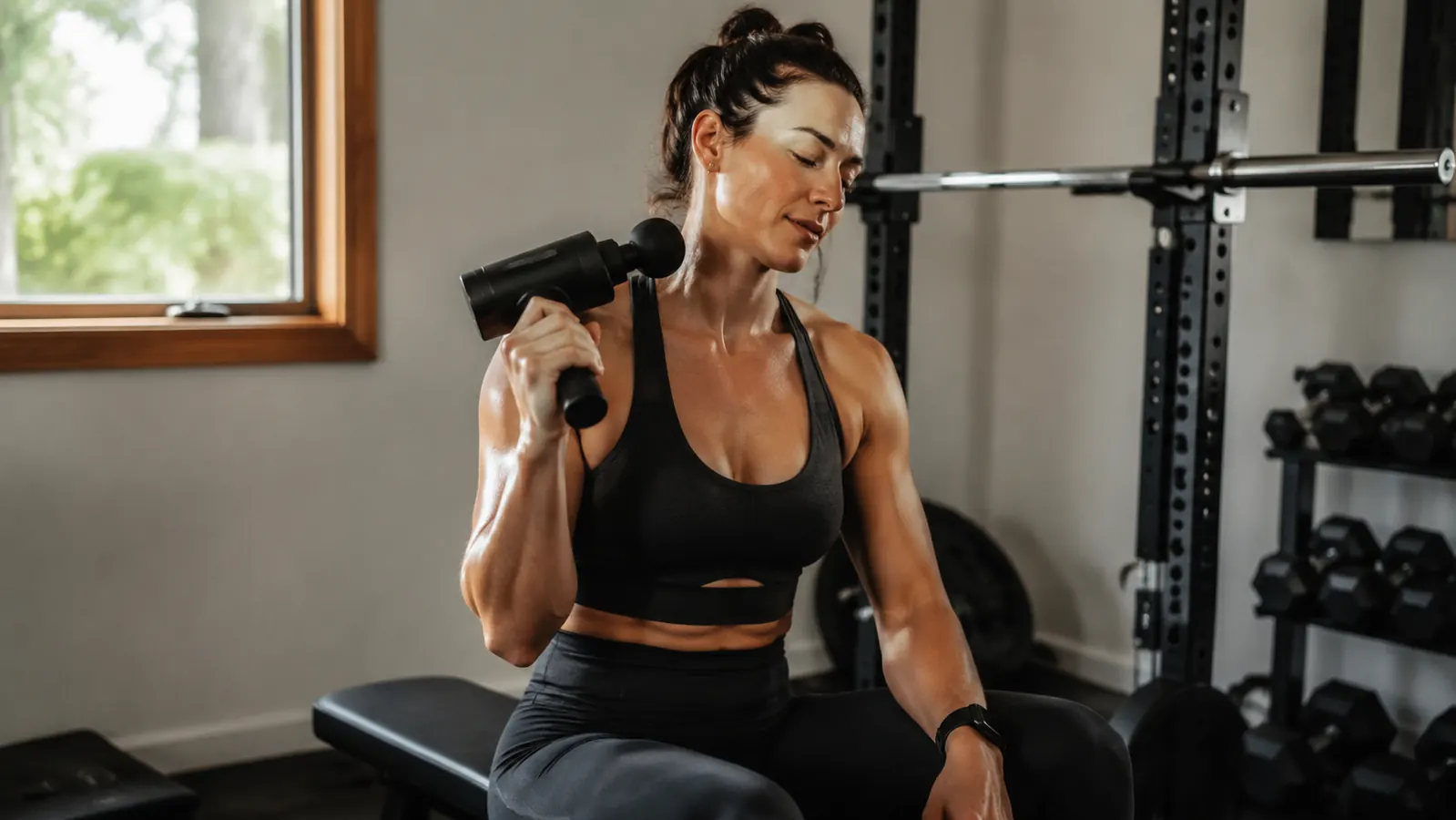
I have watched a lot of people pick up a massage gun for the first time and do exactly the wrong thing. They find the knottiest spot on their shoulder, crank the speed to maximum, and hold it there like they are trying to jackhammer the tension out. Then they wonder why they feel bruised the next morning instead of better. A percussion massage gun is not a battering ram. Used right, it is one of the most efficient recovery tools I have ever put in a client's hands. Used wrong, it just creates new problems. If your muscles are still sore 48 hours after a hard session and foam rolling is not cutting it, here is the method that actually works.
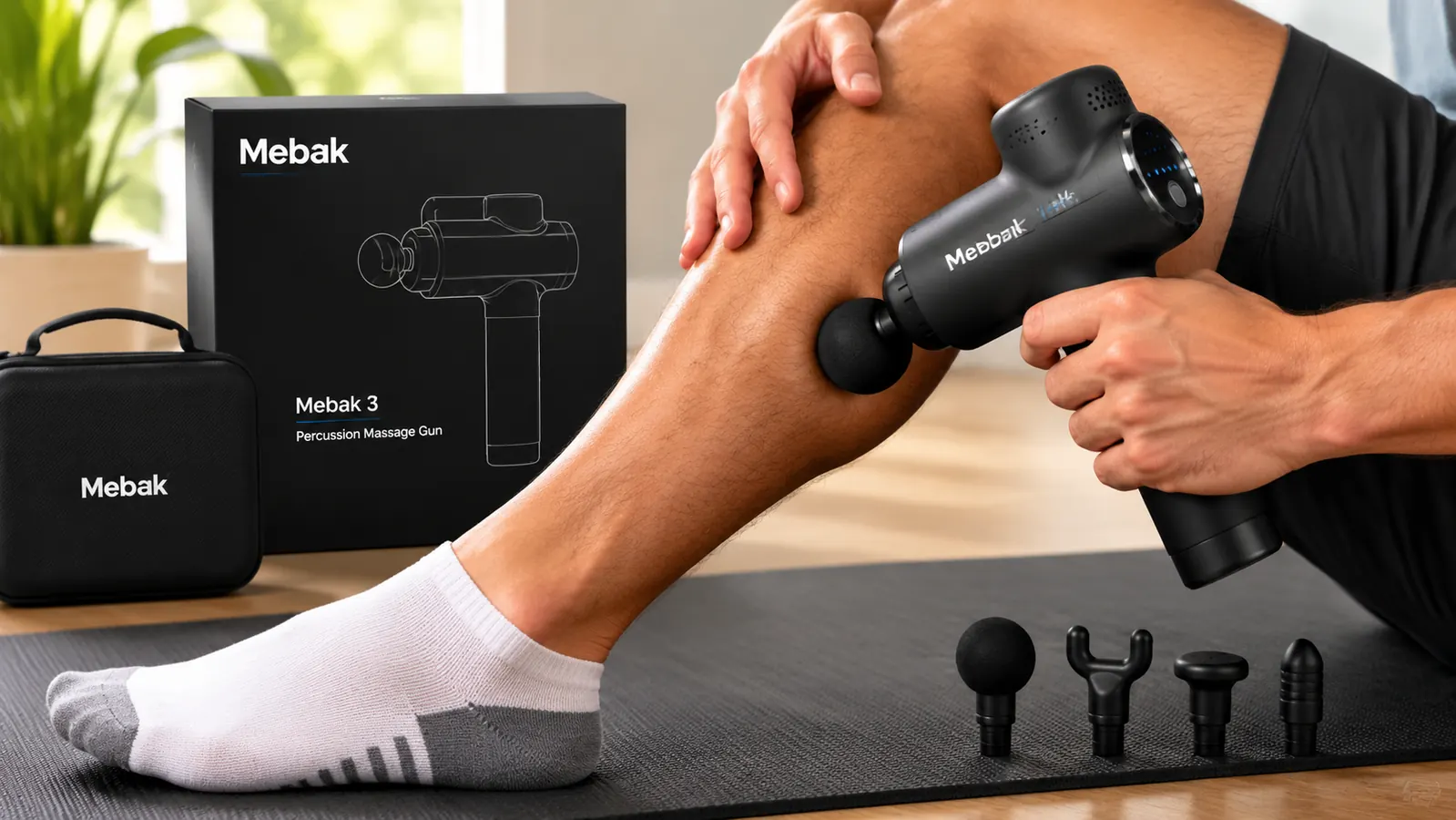
I use the Mebak 3 massage gun with most of my clients because it hits the right balance between power and control without being the size of a power drill. It has enough amplitude to reach real tissue depth on large muscle groups, a quiet motor that will not wake your household at 10 PM, and 30 speed settings so you can ease in rather than going straight to maximum intensity. The steps below are built around that tool, but the technique applies to any quality percussion massage gun.
Still sore two days later? This is the tool I reach for first.
The Mebak 3 Massage Gun delivers deep percussive therapy with 6 interchangeable heads and 30 speed settings, quiet enough for a late-night recovery session and powerful enough to actually reach the tissue. Rated 4.7 stars from nearly 20,000 verified buyers.
Amazon Check Today's Price on Amazon →Before You Start: What You Need to Know About Percussion Therapy
Percussive therapy works by sending rapid pulses of pressure into the muscle tissue. This increases local blood flow, helps break up adhesions in the fascia, and signals the nervous system to downregulate tension in that area. It is not magic. It is mechanical stimulation that your body responds to. The catch is that more pressure does not equal more benefit. Your muscles have a threshold. Go past it and you trigger a protective response that makes the tissue tighten rather than release. That is why the highest setting on your massage gun is not always the right setting.
There are also a few spots you should never use a massage gun on. Skip bony areas entirely: your spine, your knee joint, your elbow, your collarbone. Do not run it over a fresh bruise, a recent injury, or an area that is actively inflamed and hot to the touch. The massage gun is for muscle belly tissue only. If you have any doubt about a specific area due to a medical condition, talk to your doctor before using percussive therapy on it. This is a recovery tool, not a treatment for injury or acute pain.
Step 1: Pick the Right Attachment Head for the Muscle You Are Targeting
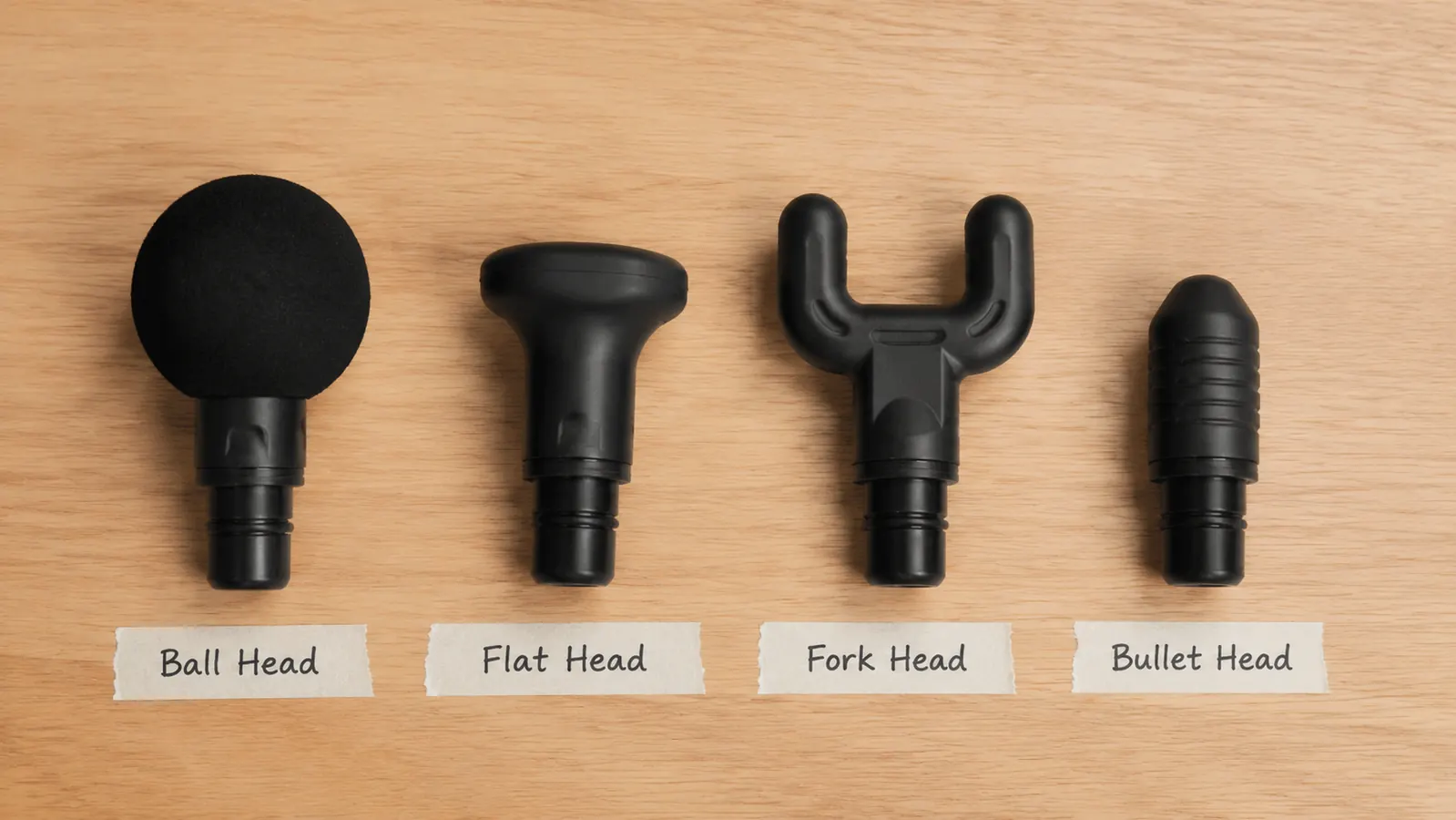
The Mebak 3 comes with six attachment heads, and the one you pick changes the feel completely. The large round ball head is your everyday workhorse. Use it on big muscle groups: quads, hamstrings, glutes, calves, and upper back. It distributes pressure broadly so it is comfortable even at higher speeds. The flat head is slightly firmer and good for denser muscles like the IT band or the lower back when you want more direct contact without it feeling sharp or poky.
The fork head is designed to straddle the spine so you can work the erectors on either side without the percussion hitting the vertebrae directly. It is one of the most useful heads for people who carry tension across their mid-back after a long shift on their feet. The bullet head is the smallest and most targeted option. Reserve this one for specific trigger points on smaller muscles, like the piriformis or the top of the shoulder blade. A few seconds in one spot with the bullet head goes a long way. Do not use it on large muscle groups or you will end up sore in a way that has nothing to do with your workout.
Step 2: Start on the Lowest Speed Setting and Let the Gun Do the Work
This is where most people go wrong. They jump to speed 3 or 4 immediately because it feels more productive. But starting low gives your nervous system a chance to adjust and lets you feel what the tissue is actually doing. On the Mebak 3, speed 1 or 2 is a gentle warm-up rhythm. Move the gun slowly across the muscle belly, no faster than about one inch per second. You are not scrubbing. You are letting the percussion sink in as you travel across the tissue.
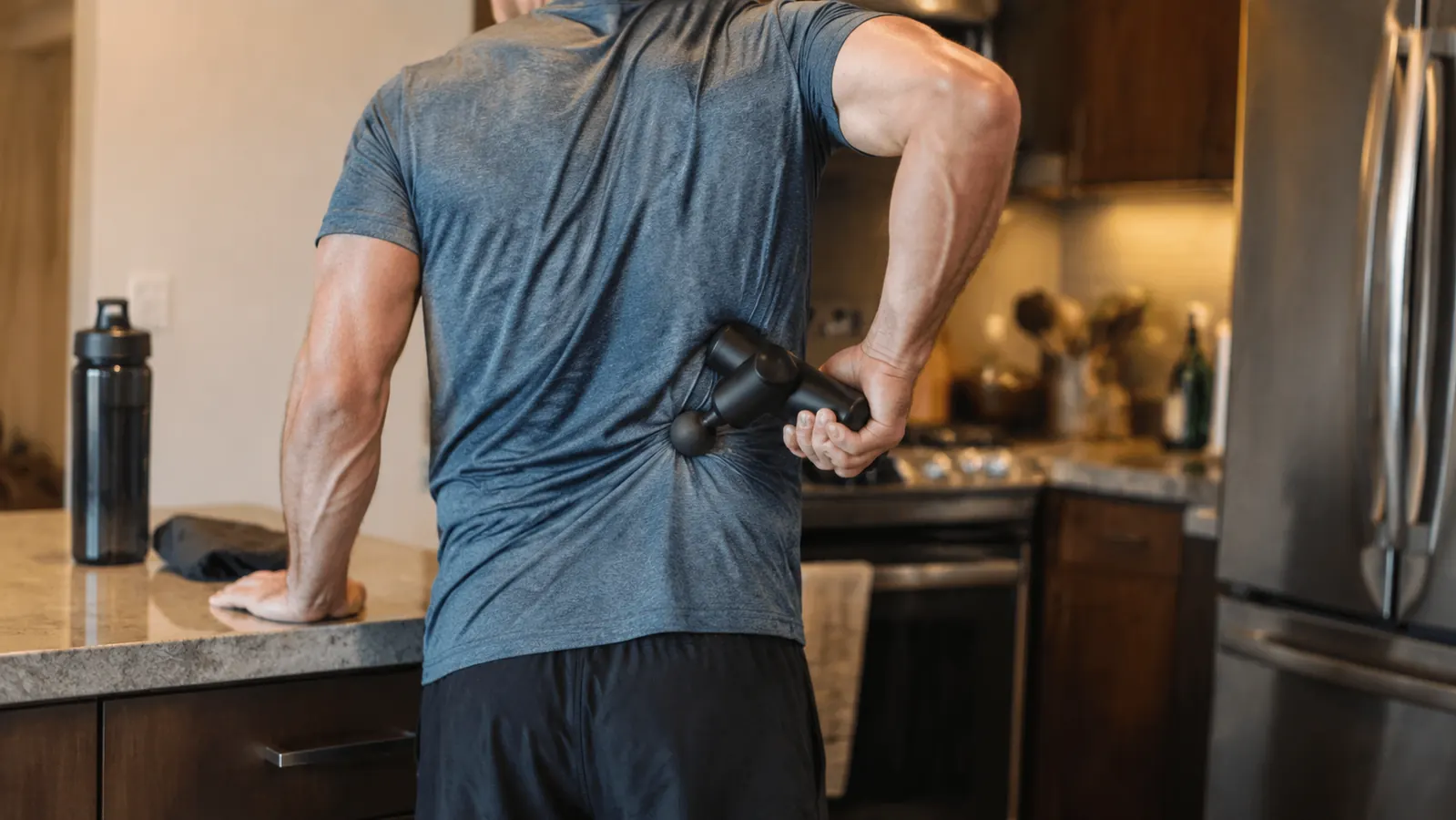
Apply light pressure. The gun should feel like it is resting against the skin rather than being pushed into it. If you press hard, the head bogs down and the motor has to work harder, which actually reduces the percussion effectiveness and heats up the tissue in a way that is not helpful. Let gravity and the weight of the gun do most of the work. After about 30 seconds on a given area at low speed, you can bump up one setting if the tissue feels like it is ready for more. You should feel a loosening sensation, not a wince.
Step 3: Spend 60 to 90 Seconds Per Muscle Group, Then Move On
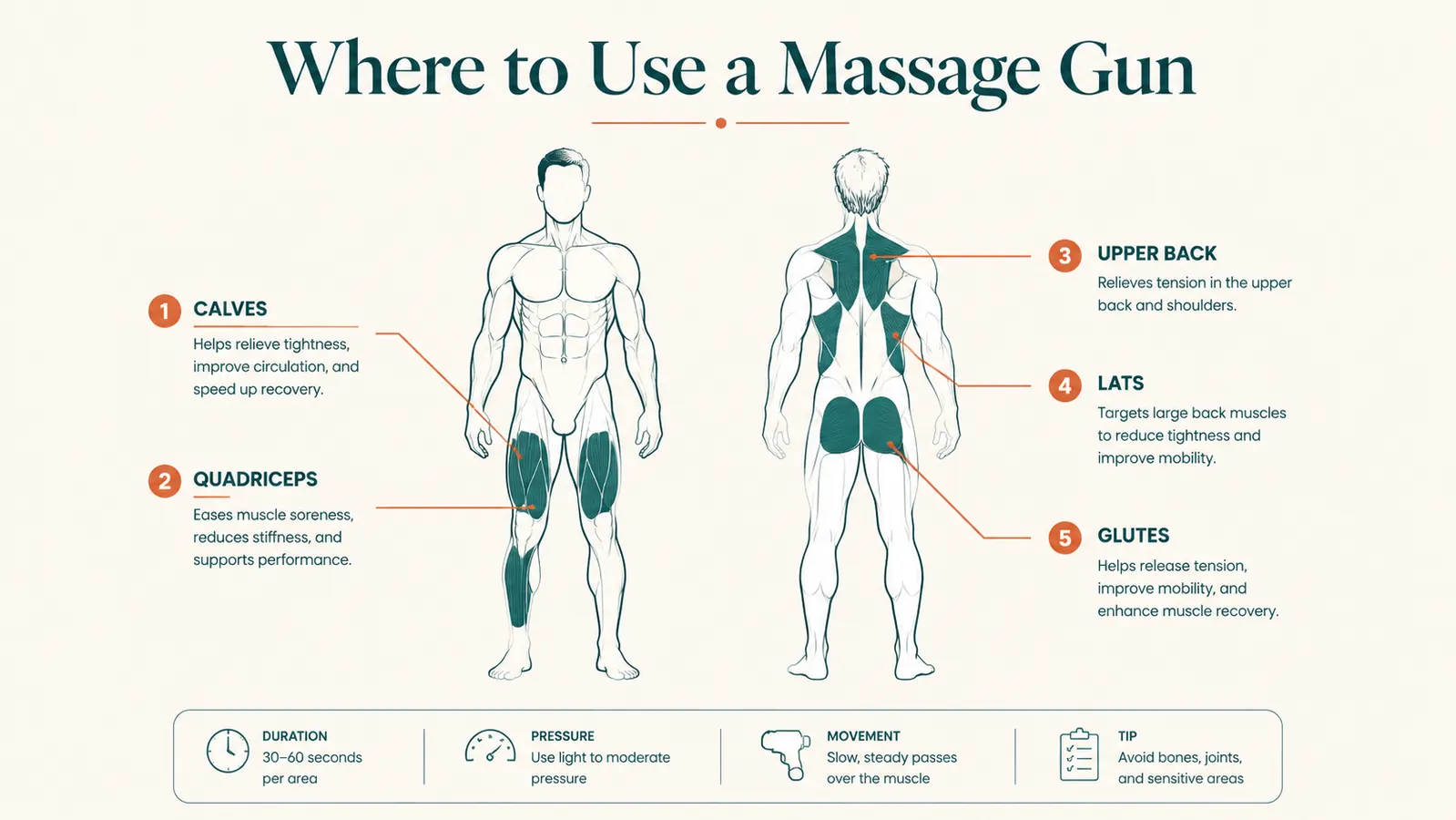
Set a mental timer. One of the most common mistakes I see is dwelling too long on one spot. Sixty to ninety seconds of active percussion on a single muscle group is enough to drive the physiological response you are after. More time does not equal more benefit. After about 90 seconds, the tissue gets desensitized and you start to lose the neurological signal that causes the release. You are spending extra time and getting diminishing returns at best, and making the area more irritated at worst.
Keep the gun moving in slow sweeping passes along the length of the muscle rather than hovering in one place. If you find a specific knot or tight spot, you can slow down and spend 10 to 15 seconds on that point before moving on, but do not camp there for the full session. Cover the whole belly of the muscle, then shift to the next group. A good post-workout session hitting four or five muscle groups takes roughly 8 to 10 minutes total. That is it. You do not need to spend 30 minutes to see results.
Sixty seconds of smart percussion beats ten minutes of mashing. The tissue needs the signal, not the suffering.
Step 4: Work From Large Muscle Groups to Smaller Ones
Think of it like warming up in reverse. After a leg workout, start with the quads, then move to the hamstrings, then the calves, then the hip flexors if they are tight. After an upper-body session, start with the lats and upper back, move to the shoulders, then the biceps and triceps. Starting with the largest muscles first gets the most blood moving in the area and prepares the smaller muscles to respond better when you get to them. Going out of order is not a disaster, but following this sequence does make a noticeable difference in how the whole session feels.
For people who are on their feet all day, like nurses or shift workers, I always start with the calves and the lower back. Those are the two spots that accumulate the most fatigue from standing and walking on hard floors for 8 to 12 hours. A quick 90-second pass on each calf with the ball head at medium speed before you wind down for the night makes a real difference in how your feet and legs feel the next morning. If you only have five minutes, hit those two areas and call it done.
Step 5: Follow Up With Light Stretching While the Tissue Is Warm
This is the step most people skip, and it is the one that makes the percussion actually stick. After you finish a muscle group with the massage gun, that tissue is vasodilated, more pliable, and temporarily more responsive to being lengthened. Take 30 to 60 seconds to stretch that muscle gently before moving on to the next group. You do not need to hold it for two minutes or push to the edge of discomfort. A gentle, comfortable stretch while the tissue is warm is more effective than a longer, harder stretch on cold muscles.
For example, after running the Mebak 3 over your quads, stand and do a simple standing quad stretch for 30 seconds per leg. After hitting your calves, do a brief calf wall stretch. After working your lats, do an overhead reach with a gentle side bend. This percussion-then-stretch sequence is what separates a recovery routine that actually changes how you feel the next day from one that just feels good in the moment. The percussion loosens the tension, and the stretch tells the muscle where its new resting length should be. Without the stretch, the muscle often recoils back toward its old pattern within a few hours.
What Else Helps Your Recovery Between Sessions
A percussion massage gun works best as part of a recovery routine, not as a standalone fix. Hydration matters more than most people realize. Your fascia is mostly water, and when you are dehydrated, tissue slides less freely and responds more slowly to manual therapy of any kind. Aim for at least half your body weight in ounces of water daily, especially on training days. Sleep is where the actual muscle repair happens, and no tool replaces it. If you are serious about recovering faster, protecting 7 to 8 hours of sleep each night is more impactful than any piece of recovery equipment you could buy.
If you want to go deeper on which muscle groups respond best to percussive therapy and how to sequence a full-body recovery session, the guide on the 10 muscle groups to target with a percussion massage gun walks through each one in detail with timing recommendations for each. And if you are deciding whether the Mebak 3 is the right tool for your budget and training style, the Mebak 3 long-term review covers four months of daily use across a range of muscle groups and training loads.
One more thing worth mentioning: percussion therapy is not a replacement for addressing the root cause of movement problems. If you have chronic tightness in the same spot every single week, the massage gun is treating the symptom, not the source. A few sessions with a physical therapist to understand why that muscle keeps tensing up will do more long-term good than any recovery tool. Use the gun to manage day-to-day soreness and keep yourself training consistently, but do not let it become a workaround for a pattern that needs a real fix.
If you are comparing options before buying, the article on the Mebak 3 vs the Hypervolt Go breaks down where each one wins so you can make the right call for your situation and your budget.
You have the steps. The Mebak 3 makes them easy to follow through on.
The Mebak 3 Massage Gun is the percussion massager I recommend to clients who want professional-grade deep tissue relief at a price that does not require a second job. Six attachment heads, 30 speed levels, and a battery that lasts long enough for a full recovery session. 4.7 stars from nearly 20,000 reviewers.
Amazon Check Today's Price on Amazon →